Easy Air Fryer Recipes for Busy Beginners
Before diving in, please note: This post is for informational purposes only. If you’d like to know more about how we approach topics, feel free to check out our friendly Disclaimer Page.
Hey there, amazing readers! 🖐️ Just a quick note: yes, we know there are a lot of ads here. Trust us, we get it—it’s not the prettiest look, but they help us keep this blog alive and kicking. Those pesky little ads cover the costs of all the behind-the-scenes magic, from hosting and tech stuff to creating content we hope you’ll love.
We’re committed to delivering quality posts, and your support (even just sticking around despite the ads) means everything to us. So, bear with us, and thanks for helping us keep the good vibes rolling. Now, on to the fun stuff! 😉
TRANSLATE BUTTON AT THE END OF THE ARTICLE
Getting home after a long workday can make cooking feel like one more item on an already crowded to-do list. We want something warm, satisfying, and reasonably nutritious, but we may not have the patience to juggle several pans while negotiating with a stubborn pile of dishes.
This is exactly where an air fryer earns its place on the kitchen counter.
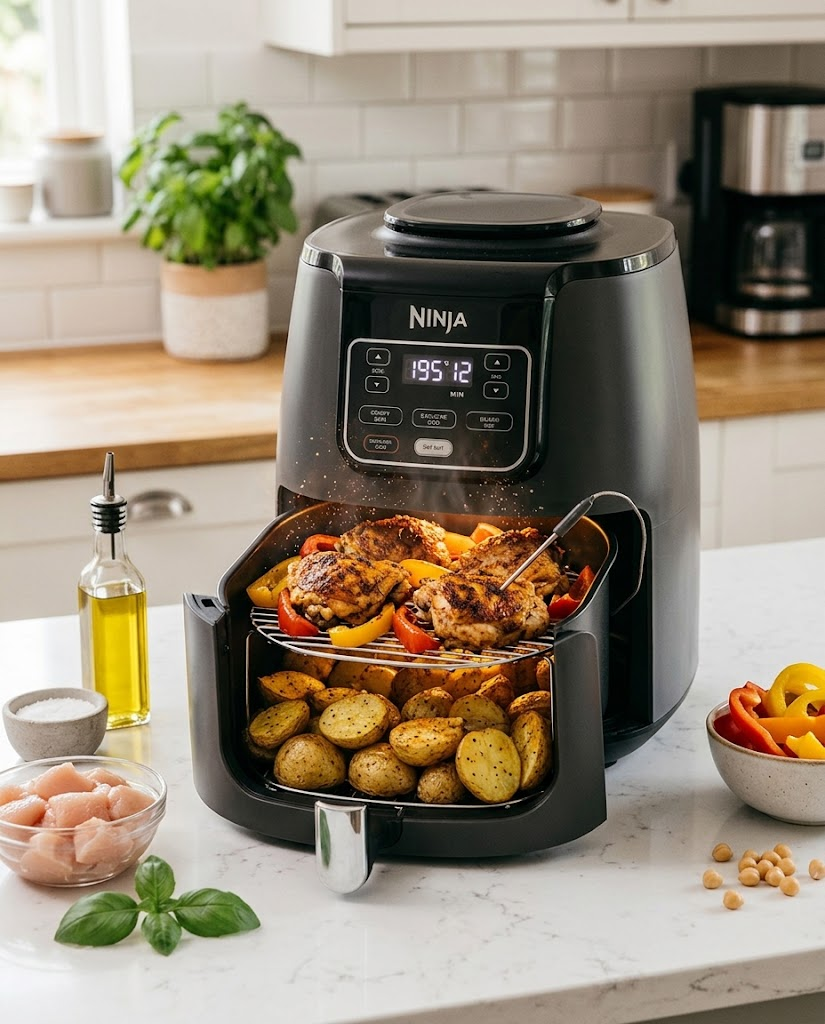
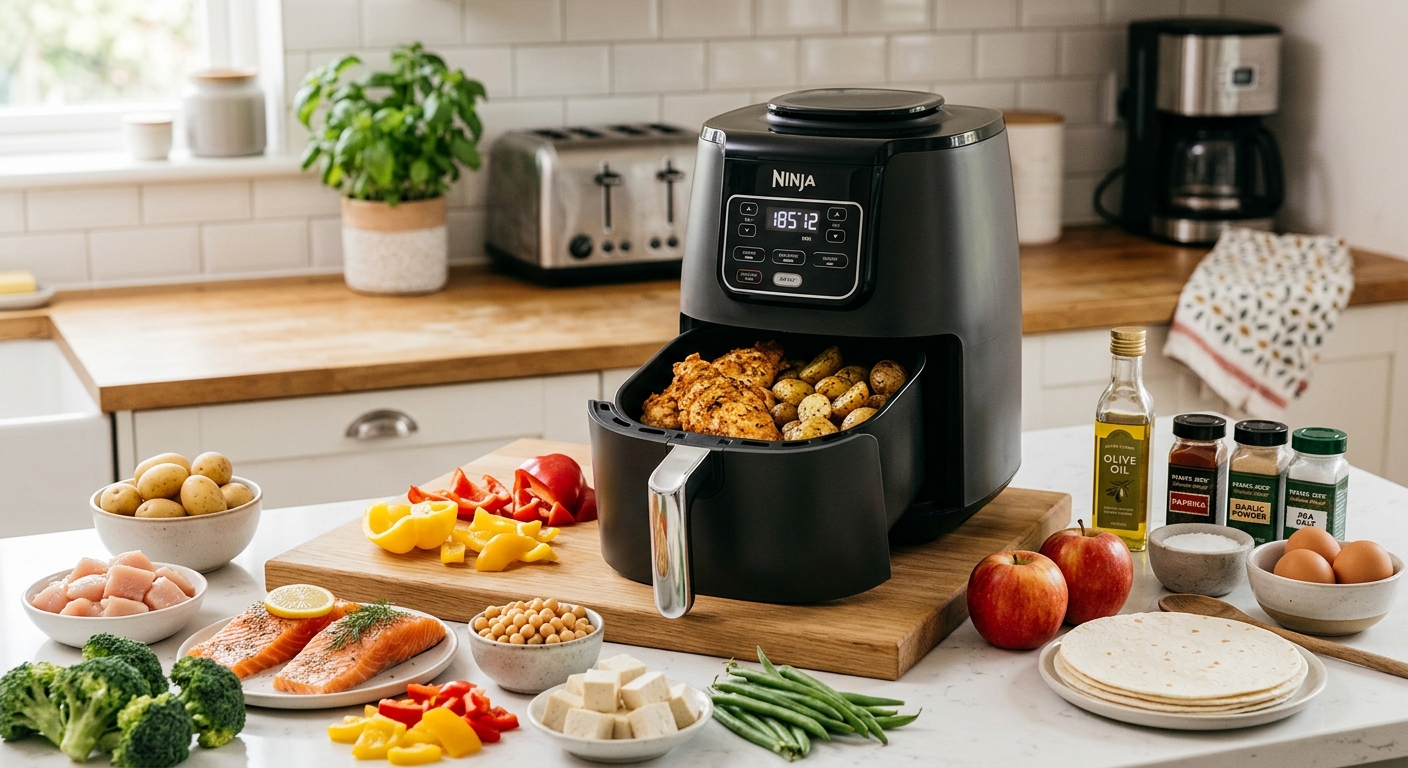
An air fryer can help us prepare crispy vegetables, tender chicken, flaky fish, quick snacks, and even simple desserts with less mess than many traditional cooking methods. It is especially useful for beginners because most recipes involve only a few basic steps: season the food, place it in the basket, set the temperature, and check it as it cooks.
Of course, an air fryer is not a tiny magical chef. It will not chop the onions or remind us that the spinach has been slowly becoming soup in the back of the refrigerator. Still, it can make everyday cooking noticeably easier.
In this guide, I’ll walk you through the basic techniques, common mistakes, useful ingredients, and easy air fryer recipes that can help busy beginners cook with more confidence.
What an Air Fryer Actually Does
An air fryer is a compact convection appliance. It circulates hot air rapidly around food, helping the exterior brown and crisp while the inside cooks.
Despite its name, it does not fry food in the same way as a deep fryer. Deep frying submerges food in hot oil. Air frying usually requires little oil, although a light coating can improve browning, texture, and flavor.
The small cooking chamber also heats quickly, which can make an air fryer practical for weeknight meals. Instead of heating a full-size oven for one chicken breast or a small serving of vegetables, we can cook a modest portion in the air fryer.
It works particularly well for:
Vegetables
Chicken pieces
Fish fillets
Meatballs
Potatoes
Frozen foods
Quesadillas
Small pizzas
Toasted sandwiches
Reheating crispy leftovers
Foods coated in a very loose, wet batter are more difficult because the batter may drip through the basket before it sets. Recipes with a dry breading or a thick coating are generally much easier for beginners.
Why Air Fryers Suit Busy Working Adults
The biggest advantage is not simply speed. It is convenience.
Most air fryer recipes require minimal monitoring. Once the food is cooking, we can prepare a salad, answer a message, change out of work clothes, or stare peacefully into the refrigerator while pretending we have a dinner plan.
Air fryers can also reduce cleanup. Many meals require only the basket, a mixing bowl, and a few utensils. Depending on the appliance, removable components may be dishwasher-safe, although it is always wise to check the manufacturer’s instructions.
An air fryer is also useful for cooking smaller portions. This makes it practical for individuals, couples, and anyone who does not want to prepare an enormous tray of food every evening.
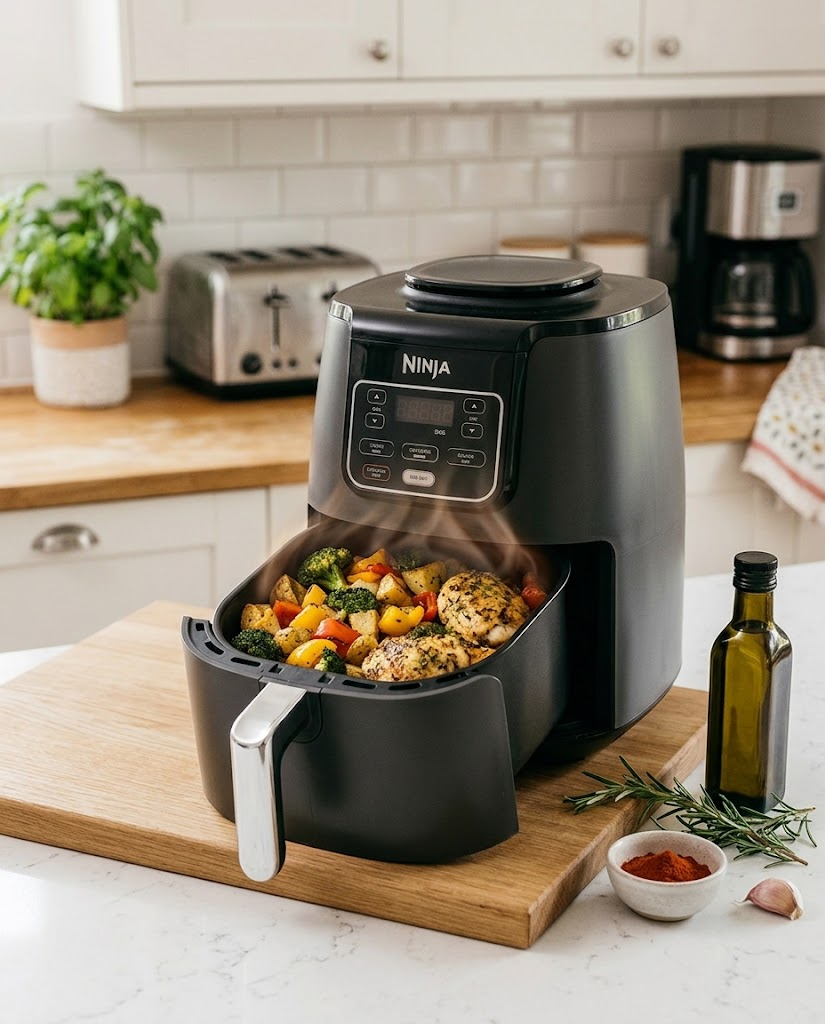
It can help us turn ordinary ingredients into satisfying meals without a complicated recipe. A chicken breast, a few potatoes, and some broccoli may not sound exciting at first, but with good seasoning and proper cooking, they can become a genuinely enjoyable dinner.
What to Do Before Your First Recipe
Start by reading the instruction manual for your particular air fryer. Models vary in size, power, basket design, controls, and recommended procedures.
Place the appliance on a stable, heat-resistant surface with enough space around the air vents. Avoid pressing it directly against a wall or placing objects on top while it is operating.
Wash the removable basket and tray before the first use. Dry everything thoroughly before returning the parts to the appliance.
Some manufacturers recommend running the air fryer empty for a short initial cycle. Others do not. Follow the instructions provided with your model rather than assuming every appliance works exactly the same way.
You may notice a mild manufacturing smell during the first few uses. Keeping the room ventilated can help. If you notice smoke, melting, electrical odors, or anything that seems abnormal, stop using the appliance and consult the manufacturer.
Beginner Air Fryer Rules That Improve Almost Every Meal
Most disappointing air fryer results come from a few simple mistakes. Fortunately, they are easy to correct.
Leave Space Around the Food
Hot air needs room to circulate. When the basket is packed too tightly, some pieces may remain pale or soft while others cook unevenly.
Arrange food in a single layer whenever possible. A little overlap may be fine for thin vegetables or fries, but avoid building a food mountain. Food mountains belong at buffets, not inside compact appliances.
For larger quantities, cook in batches.
Dry Ingredients Before Cooking
Surface moisture slows browning. Pat meat, fish, tofu, and washed vegetables dry with a clean paper towel before seasoning them.
This small step can make the difference between pleasantly crisp food and food that looks as though it has been thinking about becoming crisp.
Use a Small Amount of Oil
A light coating of oil can encourage browning and help seasonings adhere. You usually do not need much.
For many recipes, one or two teaspoons of oil is enough. Toss the ingredients in a bowl before placing them in the basket so the oil is distributed evenly.
Follow your appliance instructions regarding cooking sprays, liners, and suitable oils, since coatings and manufacturer recommendations can differ.
Turn or Shake the Food
Shaking the basket or turning ingredients halfway through cooking promotes more even browning.
Fries, potatoes, chickpeas, and chopped vegetables can usually be shaken. Chicken breasts, fish fillets, burgers, and larger pieces are easier to turn with tongs or a spatula.
Check Food Early
Air fryer cooking times are estimates, not universal laws.
A recipe may cook differently depending on:
The size and power of the air fryer
The thickness of the food
Whether the ingredients are fresh or frozen
How full the basket is
Whether the appliance was preheated
The starting temperature of the food
Begin checking a few minutes before the suggested cooking time ends. You can always cook food longer, but convincing a burnt potato to return to its former life is surprisingly difficult.
Use a Food Thermometer
Appearance alone is not always a reliable way to judge whether meat and poultry are safely cooked.
Insert an instant-read thermometer into the thickest part of the food without touching bone or the basket. Poultry should reach 165°F or 74°C. Ground meats should reach 160°F or 71°C. Whole cuts of beef, pork, veal, and lamb should reach at least 145°F or 63°C and rest for three minutes. Fish should generally reach 145°F or 63°C.
A thermometer is inexpensive, easy to use, and much more dependable than cutting into dinner repeatedly and hoping for the best.
A Practical Air Fryer Shopping List
You do not need an elaborate pantry to cook good air fryer meals. A small collection of versatile ingredients gives us plenty of options.
Useful proteins include chicken breast, chicken thighs, salmon, white fish, eggs, lean ground meat, tofu, canned chickpeas, and canned beans.
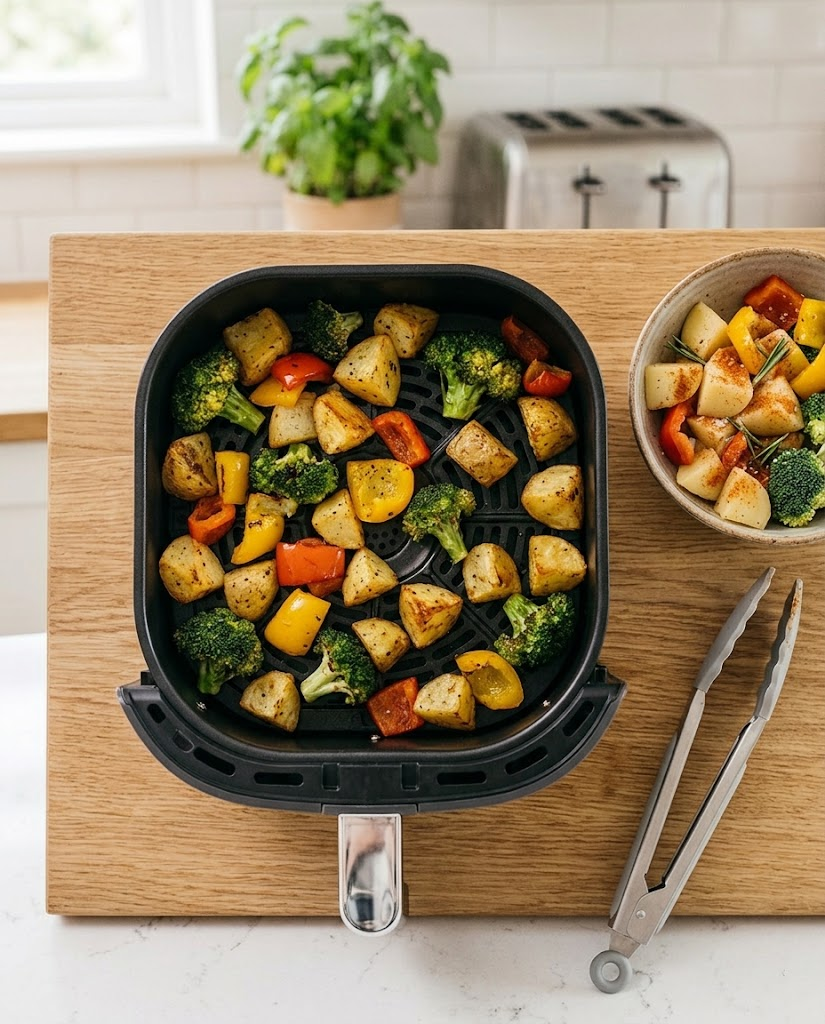
Helpful vegetables include potatoes, sweet potatoes, broccoli, cauliflower, bell peppers, zucchini, green beans, carrots, mushrooms, and onions.
For quick meals, keep tortillas, pita bread, grated cheese, breadcrumbs, frozen vegetables, and a few convenient sauces available.
A flexible seasoning collection might include:
Salt
Black pepper
Garlic powder
Onion powder
Smoked paprika
Italian seasoning
Chili powder
Ground cumin
Soy sauce
Honey
Mustard
Lemon juice
Olive or avocado oil
We do not need every seasoning sold by the supermarket. A handful of dependable flavors can carry us through many meals.
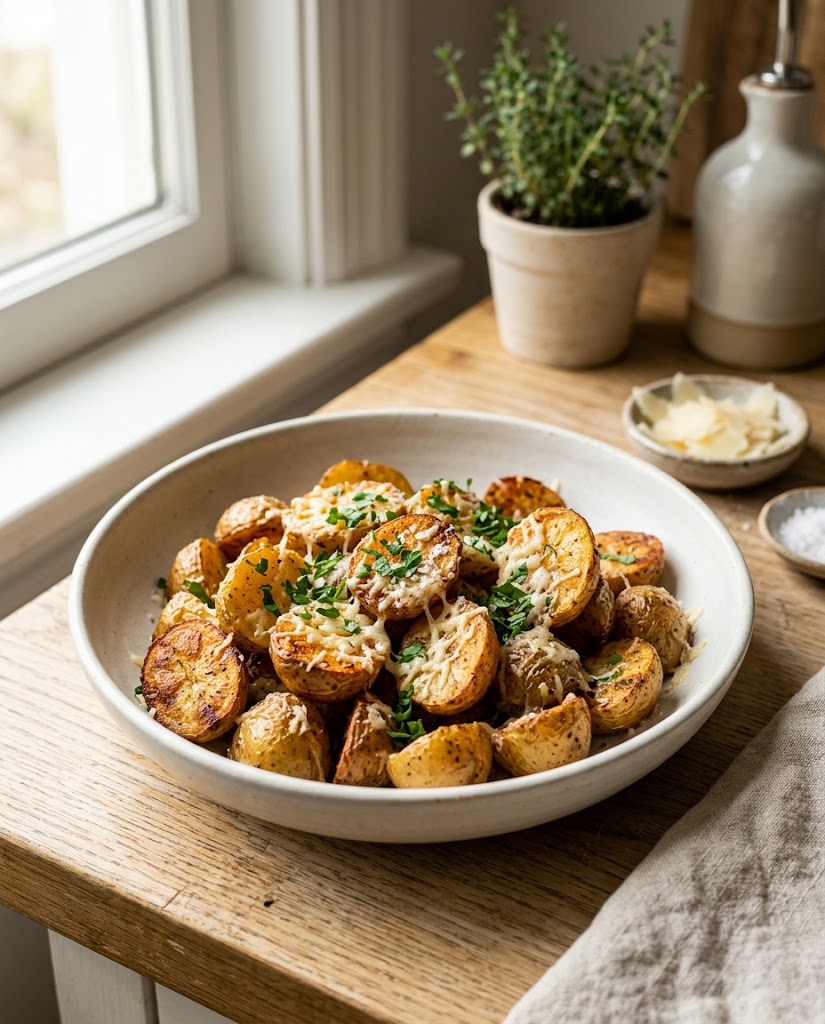
Crispy Garlic Parmesan Potatoes
These potatoes are an ideal first recipe because the ingredients are affordable, the preparation is simple, and the finished result works with almost any protein.
Preparation time: 10 minutes
Cooking time: 16 to 22 minutes
Serves: 2
Ingredients
1 pound or 450 grams baby potatoes
1 tablespoon olive oil
1 teaspoon garlic powder
½ teaspoon paprika
½ teaspoon salt
¼ teaspoon black pepper
2 tablespoons grated Parmesan
Chopped parsley, optional
Method
Cut the potatoes into evenly sized halves or quarters. Smaller, similarly sized pieces cook more consistently.
Place them in a bowl and add the oil, garlic powder, paprika, salt, and pepper. Toss until evenly coated.
Air fry at 390°F or 200°C for 16 to 22 minutes. Shake the basket every six or seven minutes.
When the potatoes are golden and tender, toss them with Parmesan. Cook for another one or two minutes if you prefer a more toasted finish.
Sprinkle with parsley and serve with chicken, fish, eggs, or a simple salad.
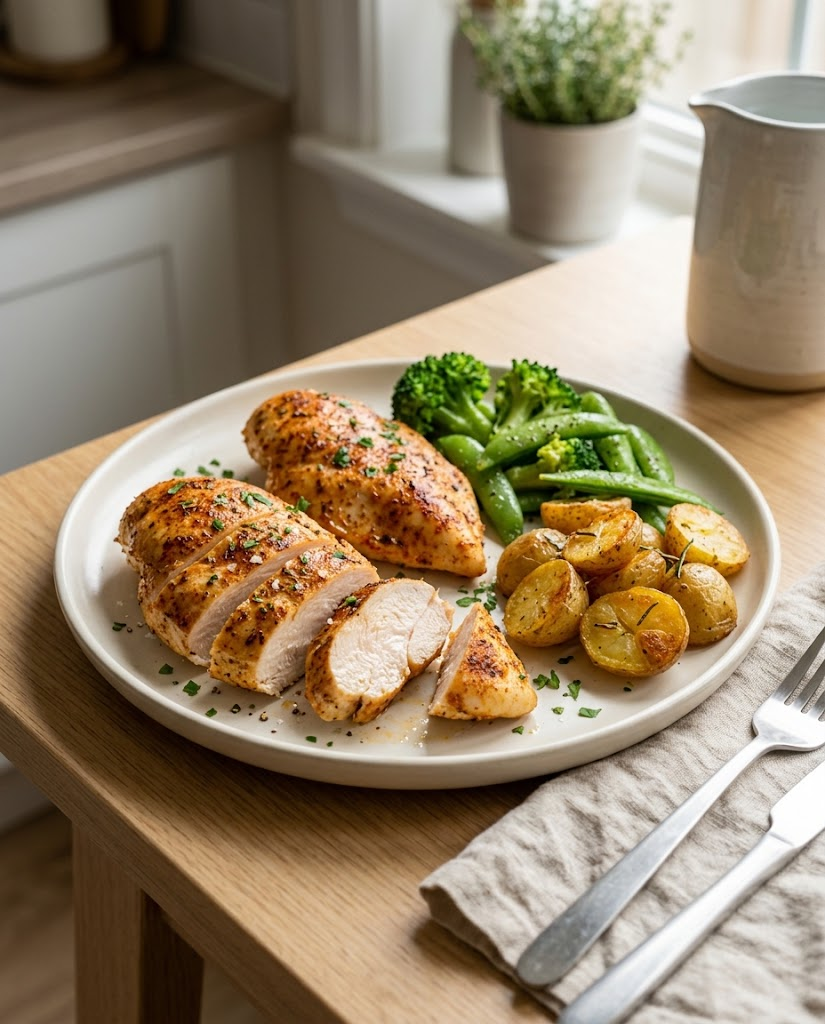
Juicy Air Fryer Chicken Breast
Chicken breast can dry out when it is cooked too long. The easiest solution is to use pieces of similar thickness and rely on a thermometer rather than guesswork.
Preparation time: 8 minutes
Cooking time: 12 to 18 minutes
Serves: 2
Ingredients
2 small boneless, skinless chicken breasts
2 teaspoons olive oil
1 teaspoon paprika
1 teaspoon garlic powder
½ teaspoon dried oregano
½ teaspoon salt
¼ teaspoon black pepper
Method
Pat the chicken dry. If one end is much thicker than the other, gently pound the thickest section until the breast has a more even thickness.
Rub the chicken with oil and seasonings.
Place the breasts in the air fryer basket with space between them. Cook at 375°F or 190°C for 12 to 18 minutes, turning halfway through.
Check the thickest part with a food thermometer. Remove the chicken when it reaches 165°F or 74°C.
Allow it to rest for five minutes before slicing. Resting gives the juices time to settle and helps the meat remain moist.
Serve with potatoes and vegetables, slice it into a salad, or store it for tomorrow’s lunch.
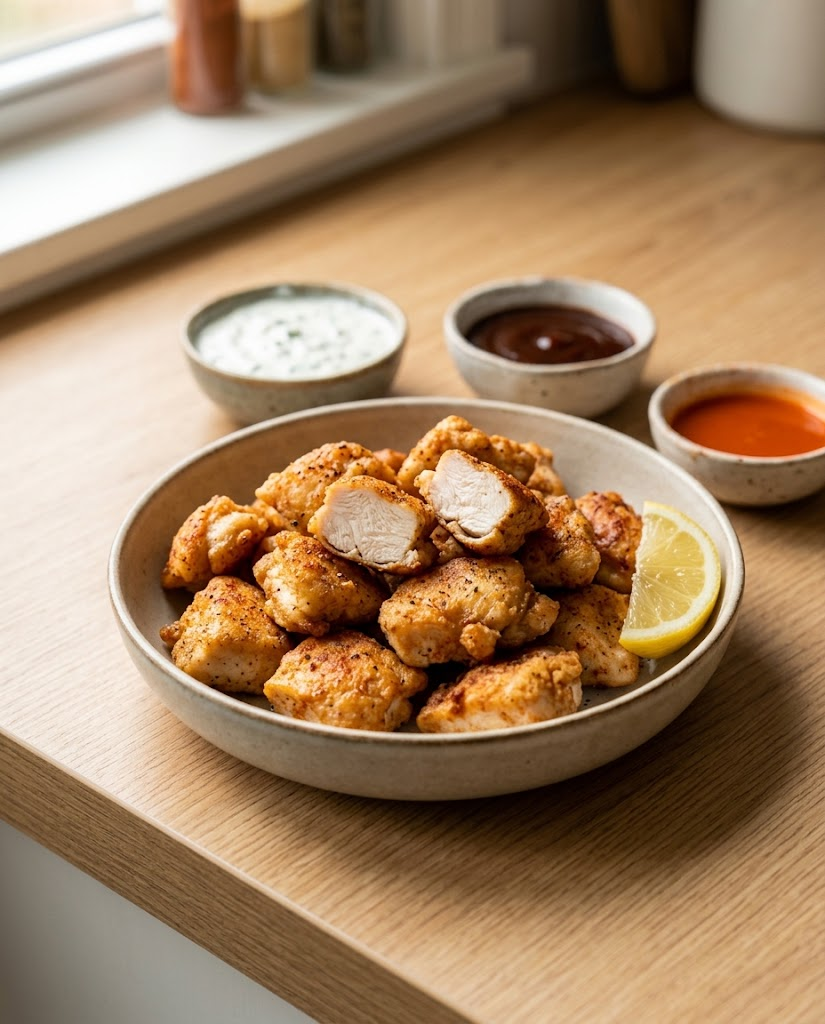
Crispy Chicken Bites
Chicken bites cook quickly and can be used in wraps, rice bowls, salads, or snack plates.
Preparation time: 10 minutes
Cooking time: 9 to 13 minutes
Serves: 2
Ingredients
1 pound or 450 grams boneless chicken breast or thigh
2 teaspoons oil
1 teaspoon paprika
1 teaspoon garlic powder
½ teaspoon onion powder
½ teaspoon salt
¼ teaspoon black pepper
Method
Cut the chicken into bite-sized pieces of similar size. Pat them dry and toss with the oil and seasonings.
Arrange the chicken in a single layer. Air fry at 390°F or 200°C for 9 to 13 minutes.
Shake the basket halfway through cooking. Check several of the largest pieces to confirm that they have reached 165°F or 74°C.
Serve with yogurt sauce, barbecue sauce, hot sauce, or a squeeze of lemon.
For a quick meal, add the chicken to a tortilla with lettuce, tomatoes, cheese, and your favorite dressing.
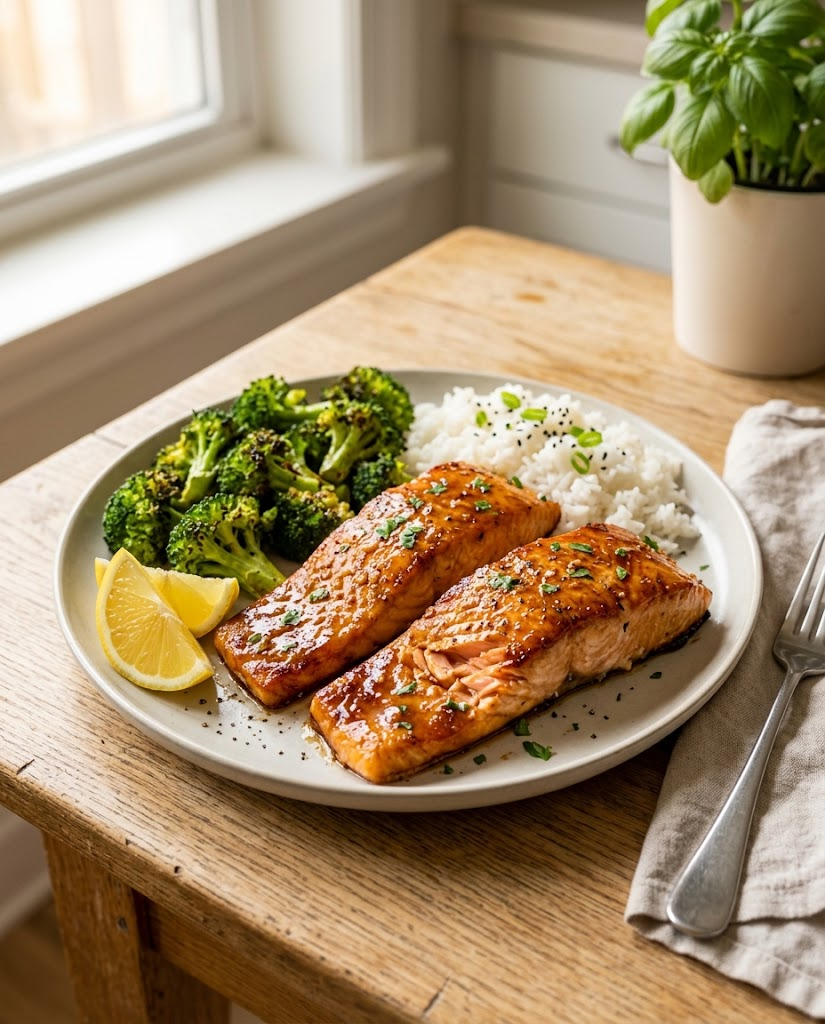
Honey Soy Salmon
Salmon may look like a restaurant-only ingredient, but it is surprisingly beginner-friendly. The main secret is to avoid cooking it until it becomes dry.
Preparation time: 5 minutes
Cooking time: 7 to 11 minutes
Serves: 2
Ingredients
2 salmon fillets
1 tablespoon soy sauce
2 teaspoons honey
1 teaspoon oil
½ teaspoon garlic powder
Black pepper to taste
Lemon wedges, optional
Method
Pat the salmon dry. Mix the soy sauce, honey, oil, garlic powder, and pepper in a small bowl.
Brush the mixture over the top and sides of the fish.
Place the fillets skin-side down in the basket. Air fry at 380°F or 193°C for 7 to 11 minutes, depending on thickness.
Check the fish early. It should flake easily, and the safe internal temperature is 145°F or 63°C.
Serve with air-fried broccoli, rice, or a bagged salad for a dinner that looks suspiciously impressive for the amount of effort involved.
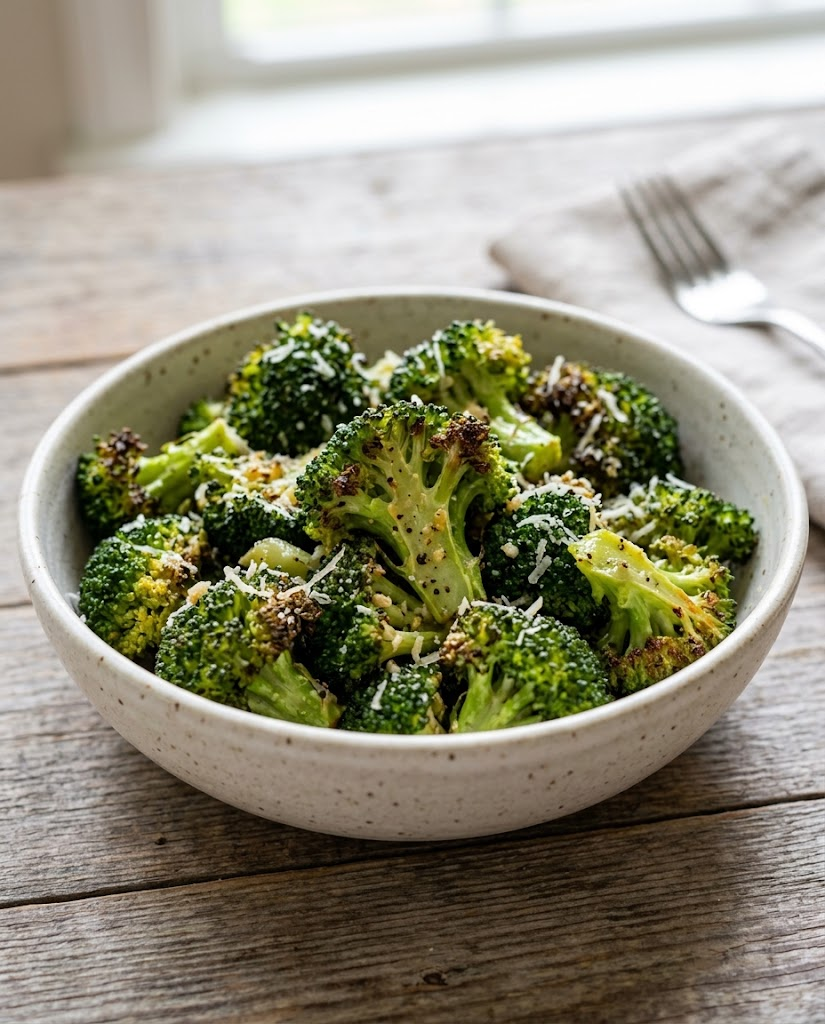
Lemon Garlic Broccoli
Air-fried broccoli develops browned edges while remaining tender inside. It is one of the easiest ways to make a basic vegetable feel more interesting.
Preparation time: 5 minutes
Cooking time: 7 to 10 minutes
Serves: 2
Ingredients
3 cups broccoli florets
2 teaspoons olive oil
½ teaspoon garlic powder
¼ teaspoon salt
Black pepper to taste
1 teaspoon lemon juice
Grated Parmesan, optional
Method
Cut large florets into smaller pieces so they cook at a similar rate. Pat the broccoli dry after washing.
Toss it with oil, garlic powder, salt, and pepper.
Air fry at 375°F or 190°C for 7 to 10 minutes. Shake the basket halfway through.
Finish with lemon juice and Parmesan if desired.
For softer broccoli, add a teaspoon of water beneath the removable crisping tray only when your manufacturer’s instructions permit it. Otherwise, lower the temperature slightly and cook for an extra minute or two.
Quick Vegetable Quesadillas
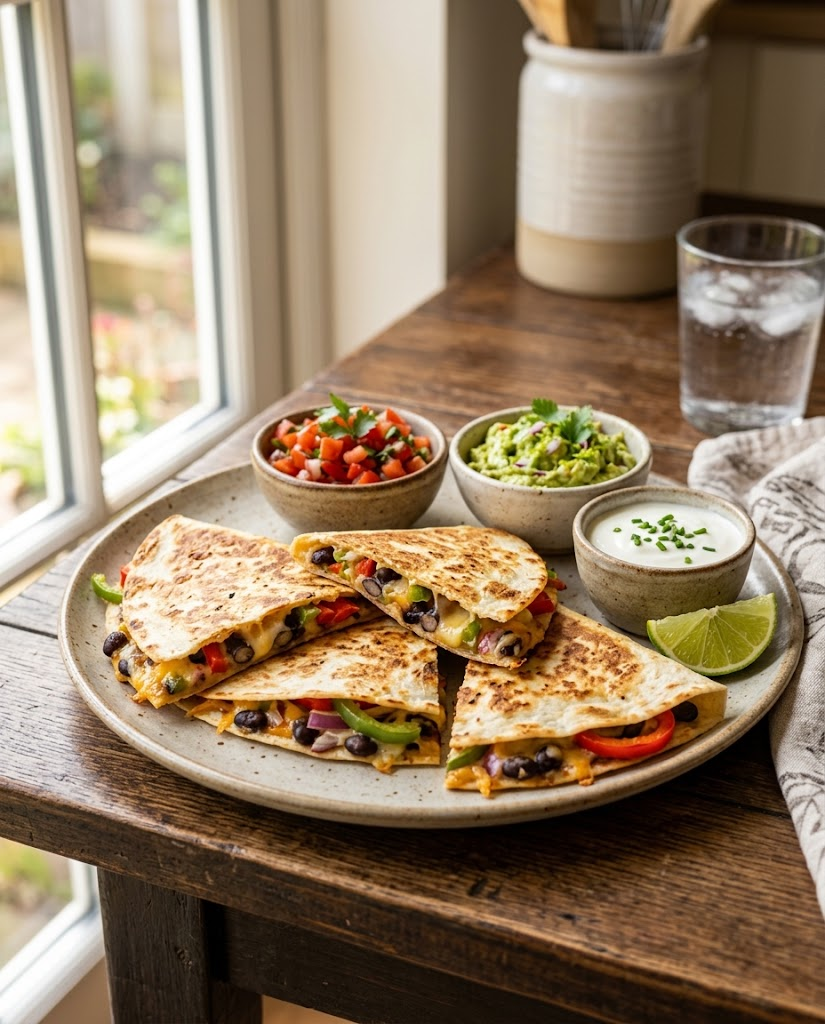
Quesadillas are perfect for using small amounts of cheese, cooked vegetables, chicken, beans, or leftovers.
Preparation time: 7 minutes
Cooking time: 5 to 8 minutes
Serves: 1 to 2
Ingredients
2 medium flour tortillas
½ cup grated cheese
¼ cup thinly sliced bell pepper
¼ cup cooked beans or shredded chicken, optional
1 tablespoon chopped onion
Salsa or yogurt for serving
Method
Place one tortilla on a clean surface. Sprinkle the cheese evenly over it, leaving a small border around the edge.
Add the bell pepper, onion, and optional beans or chicken. Place the second tortilla on top.
Air fry at 350°F or 175°C for 5 to 8 minutes, turning carefully halfway through.
Airflow may lift a light tortilla during cooking. Secure it with an air fryer-safe rack if your model includes one. Do not place loose objects on top of the food.
Let the quesadilla cool for one minute before slicing. Serve it with salsa, guacamole, or plain yogurt.
Crispy Seasoned Chickpeas
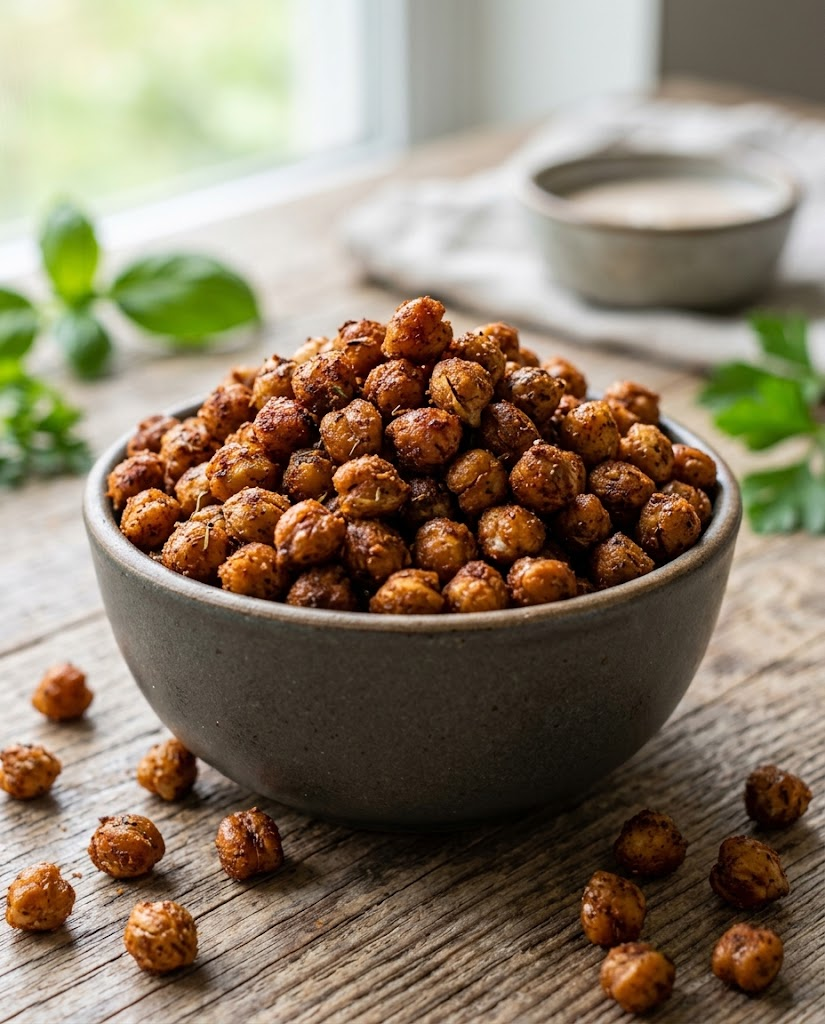
Crispy chickpeas are inexpensive, plant-based, and easy to add to salads or grain bowls. They also make a satisfying savory snack.
Preparation time: 8 minutes
Cooking time: 12 to 18 minutes
Serves: 2 to 3
Ingredients
1 can chickpeas, drained and rinsed
2 teaspoons oil
½ teaspoon smoked paprika
½ teaspoon garlic powder
¼ teaspoon ground cumin
¼ teaspoon salt
Method
Dry the chickpeas thoroughly. Removing as much surface moisture as possible helps them crisp.
Toss them with oil and seasonings.
Air fry at 390°F or 200°C for 12 to 18 minutes. Shake the basket every four or five minutes.
They will become firmer as they cool, so remove them before they become excessively hard.
Enjoy them fresh for the best texture. If storing leftovers, let them cool completely before placing them in a container.
Easy Turkey or Beef Meatballs
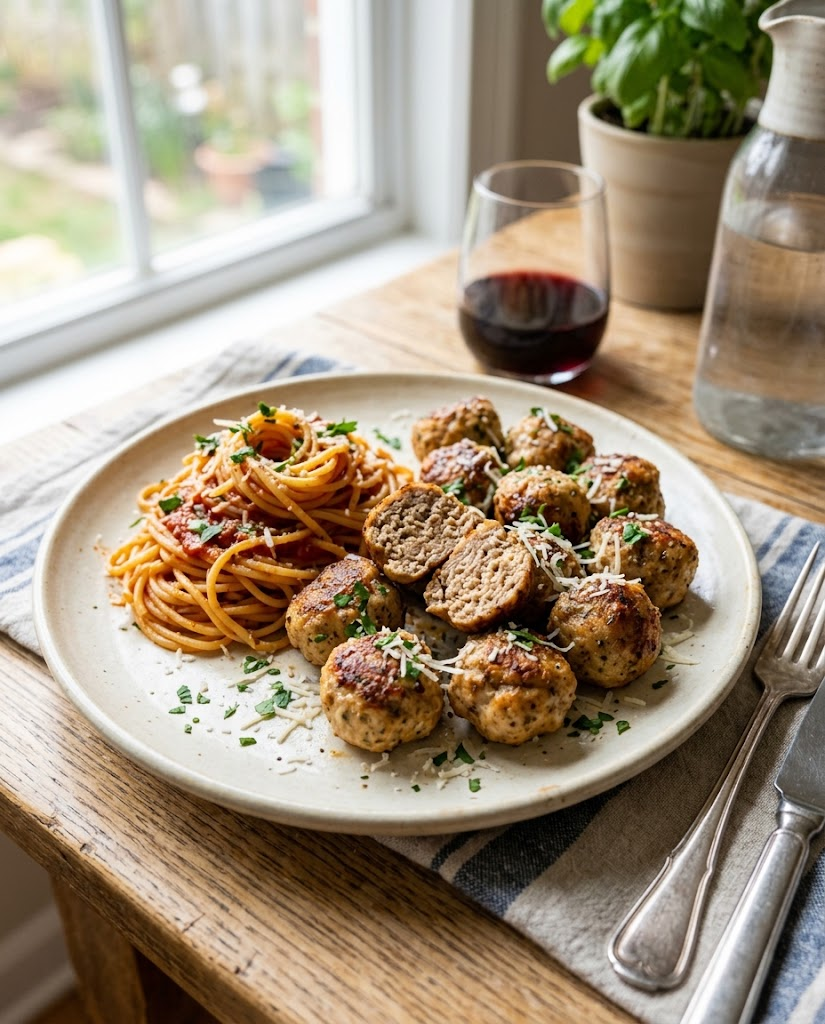
These simple meatballs can be paired with pasta, rice, vegetables, flatbread, or tomato sauce.
Preparation time: 12 minutes
Cooking time: 9 to 13 minutes
Serves: 3 to 4
Ingredients
1 pound or 450 grams lean ground turkey or beef
¼ cup breadcrumbs
1 egg
1 teaspoon garlic powder
1 teaspoon Italian seasoning
½ teaspoon salt
¼ teaspoon black pepper
2 tablespoons grated Parmesan, optional
Method
Combine all the ingredients in a bowl. Mix gently until everything is evenly distributed. Avoid squeezing or overworking the meat, which can produce dense meatballs.
Shape the mixture into evenly sized balls.
Arrange them in the basket with space between each one. Air fry at 380°F or 193°C for 9 to 13 minutes, turning halfway through.
Ground turkey should reach 165°F or 74°C. Ground beef should reach 160°F or 71°C.
Serve immediately or cool and refrigerate for quick meals later in the week.
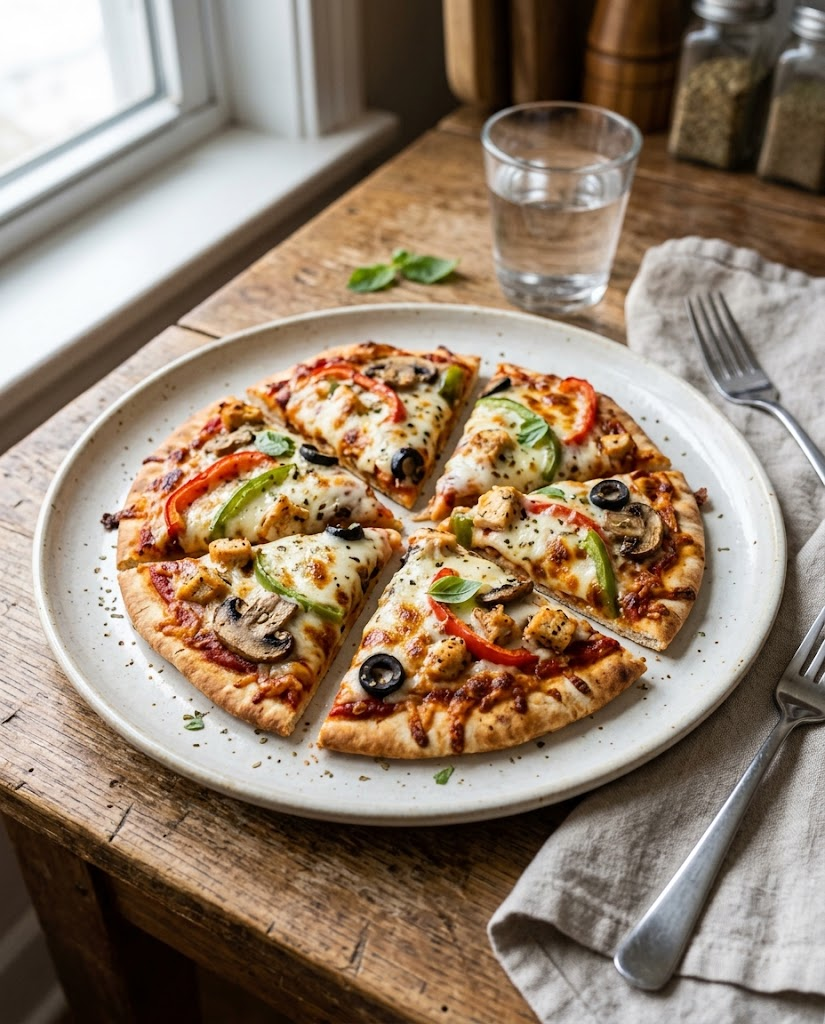
Personal Pita Pizzas
Pita pizzas are faster than ordering delivery and easier than making dough from scratch.
Preparation time: 5 minutes
Cooking time: 5 to 8 minutes
Serves: 1
Ingredients
1 pita bread
2 tablespoons pizza sauce
⅓ cup grated mozzarella
Sliced bell peppers, mushrooms, olives, or cooked chicken
Italian seasoning, optional
Method
Spread the sauce across the pita, leaving a small border around the edge.
Add the cheese and toppings. Avoid piling on too many wet ingredients because they can make the base soft.
Air fry at 360°F or 182°C for 5 to 8 minutes. Check early because thin pita bread can brown quickly.
Allow the pizza to cool briefly before slicing. Molten cheese has no respect for an exhausted person’s schedule or fingertips.
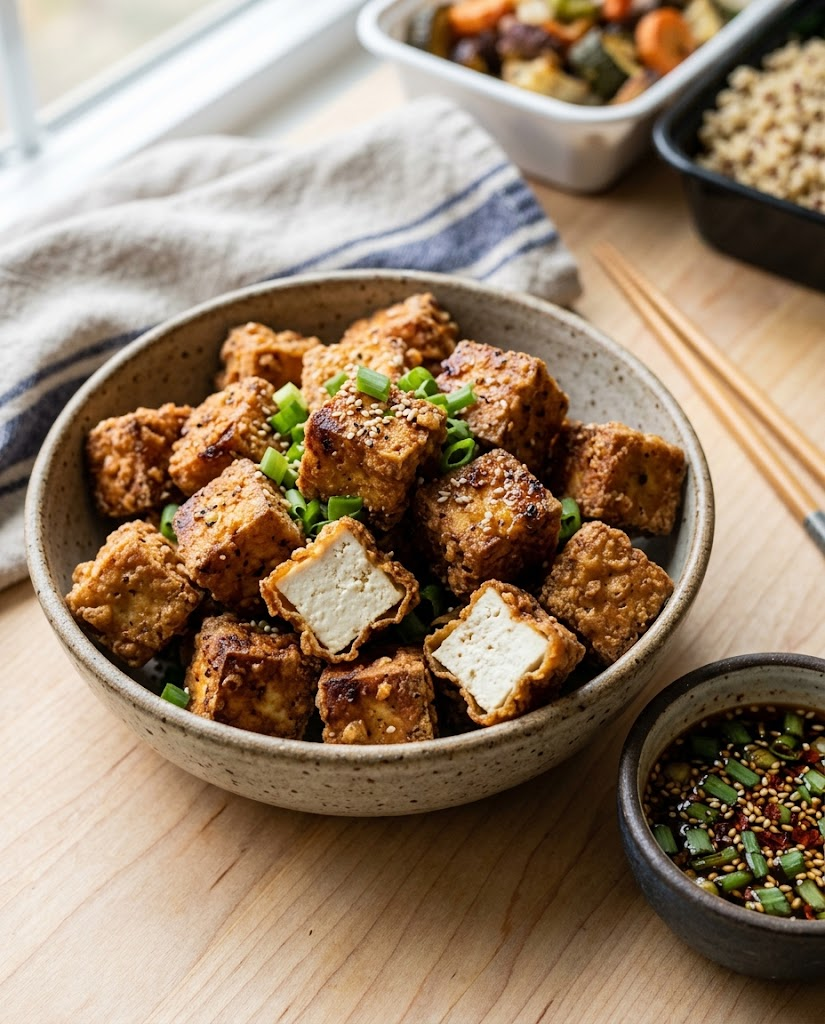
Air Fryer Tofu Bites
Tofu absorbs flavor well and becomes pleasantly firm around the edges in an air fryer.
Preparation time: 12 minutes
Cooking time: 12 to 16 minutes
Serves: 2
Ingredients
14 ounces or 400 grams extra-firm tofu
1 tablespoon soy sauce
2 teaspoons oil
1 tablespoon cornstarch
½ teaspoon garlic powder
¼ teaspoon black pepper
Method
Drain the tofu and press it gently between clean towels to remove excess moisture.
Cut it into cubes. Toss with soy sauce and oil, then sprinkle with cornstarch, garlic powder, and pepper.
Mix carefully until the pieces are lightly coated.
Air fry at 390°F or 200°C for 12 to 16 minutes. Shake the basket two or three times during cooking.
Serve in rice bowls, wraps, noodle dishes, or salads with your favorite sauce.
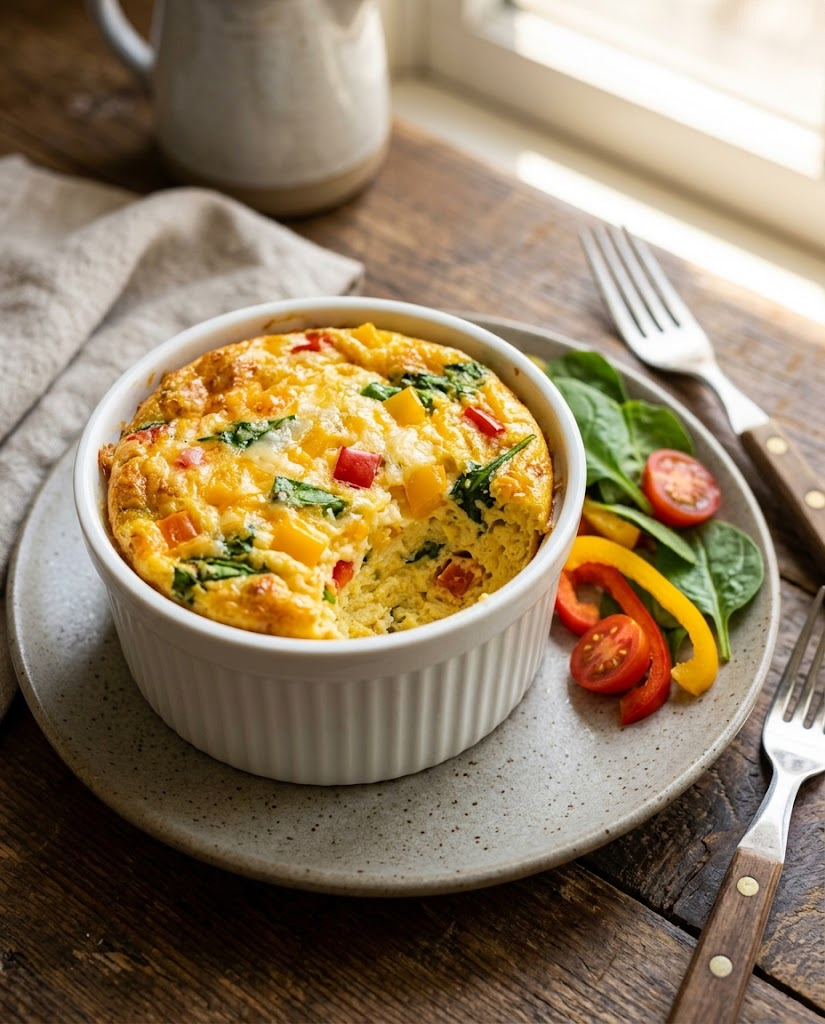
Egg and Vegetable Ramekins
This recipe works well for breakfast, lunch, or a quick dinner. Use ramekins specifically designed for oven or air fryer cooking.
Preparation time: 7 minutes
Cooking time: 8 to 12 minutes
Serves: 1
Ingredients
2 eggs
2 tablespoons milk
2 tablespoons grated cheese
2 tablespoons chopped bell pepper
1 tablespoon chopped spinach
Salt and pepper to taste
Oil for greasing
Method
Lightly grease an air fryer-safe ramekin.
Whisk the eggs, milk, salt, and pepper. Stir in the cheese and vegetables.
Pour the mixture into the ramekin, leaving room at the top.
Air fry at 320°F or 160°C for 8 to 12 minutes. The center should be fully set, and an egg dish should reach 160°F or 71°C.
Let the ramekin cool briefly before handling it. It will be extremely hot, even if it looks innocent.
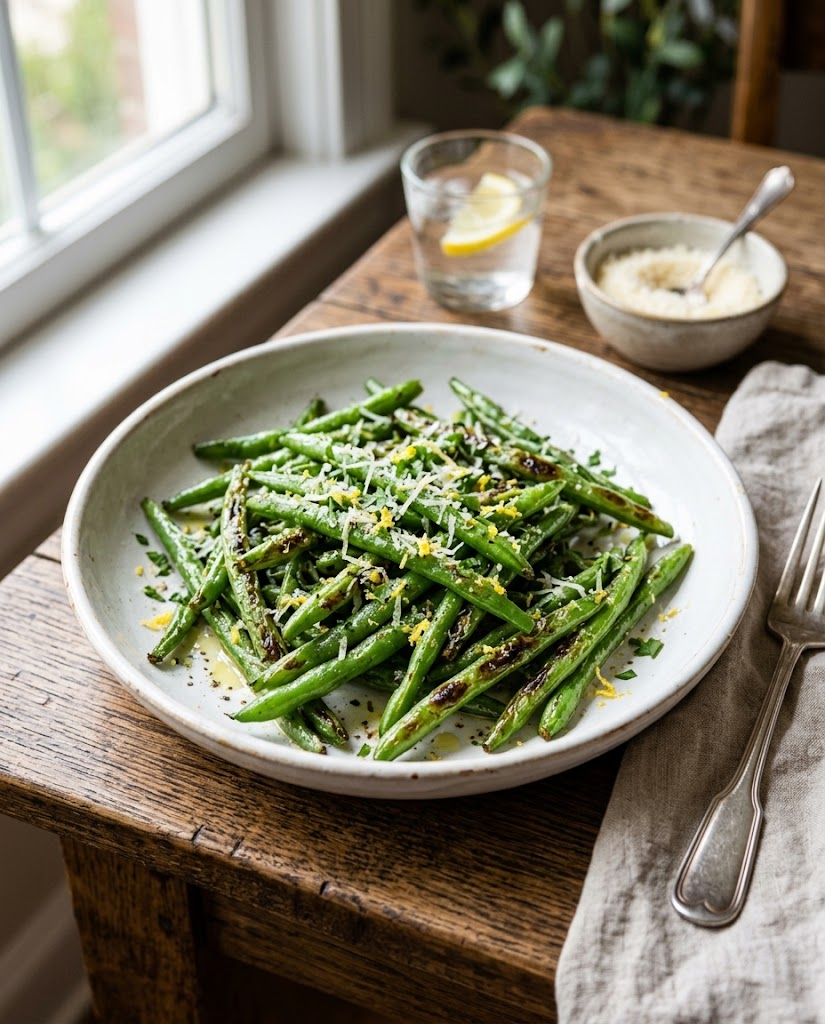
Crispy Green Beans
Green beans become lightly blistered and flavorful in only a few minutes.
Preparation time: 5 minutes
Cooking time: 7 to 10 minutes
Serves: 2
Ingredients
10 ounces or 280 grams fresh green beans
2 teaspoons olive oil
½ teaspoon garlic powder
¼ teaspoon salt
Black pepper to taste
Lemon zest or Parmesan, optional
Method
Trim the ends of the green beans and pat them dry.
Toss with oil, garlic powder, salt, and pepper.
Air fry at 380°F or 193°C for 7 to 10 minutes. Shake once or twice during cooking.
Finish with lemon zest or Parmesan. Serve them beside fish, chicken, tofu, or meatballs.
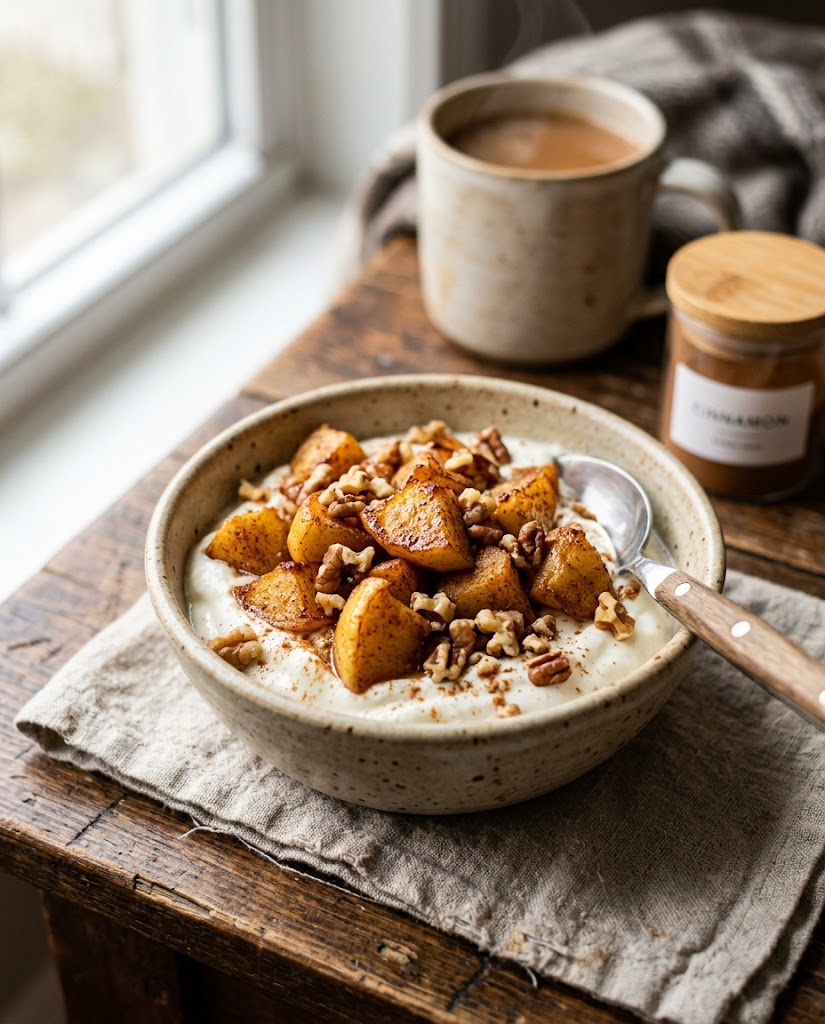
Cinnamon Apple Bites
The air fryer is not limited to savory food. These apples make a simple dessert or a warm topping for yogurt and oatmeal.
Preparation time: 7 minutes
Cooking time: 8 to 12 minutes
Serves: 2
Ingredients
2 firm apples
1 teaspoon melted butter or neutral oil
½ teaspoon cinnamon
1 teaspoon brown sugar or maple syrup, optional
Pinch of salt
Method
Core the apples and cut them into bite-sized pieces. Peeling is optional.
Toss them with butter or oil, cinnamon, optional sweetener, and a tiny pinch of salt.
Air fry at 350°F or 175°C for 8 to 12 minutes. Shake halfway through.
Serve warm on their own or spoon them over Greek yogurt. Add chopped nuts for extra crunch.
A Five-Day Air Fryer Dinner Plan
A small meal plan can remove the daily question of what to cook. We do not need an ambitious spreadsheet with seventeen color-coded tabs. We only need enough structure to make the week easier.
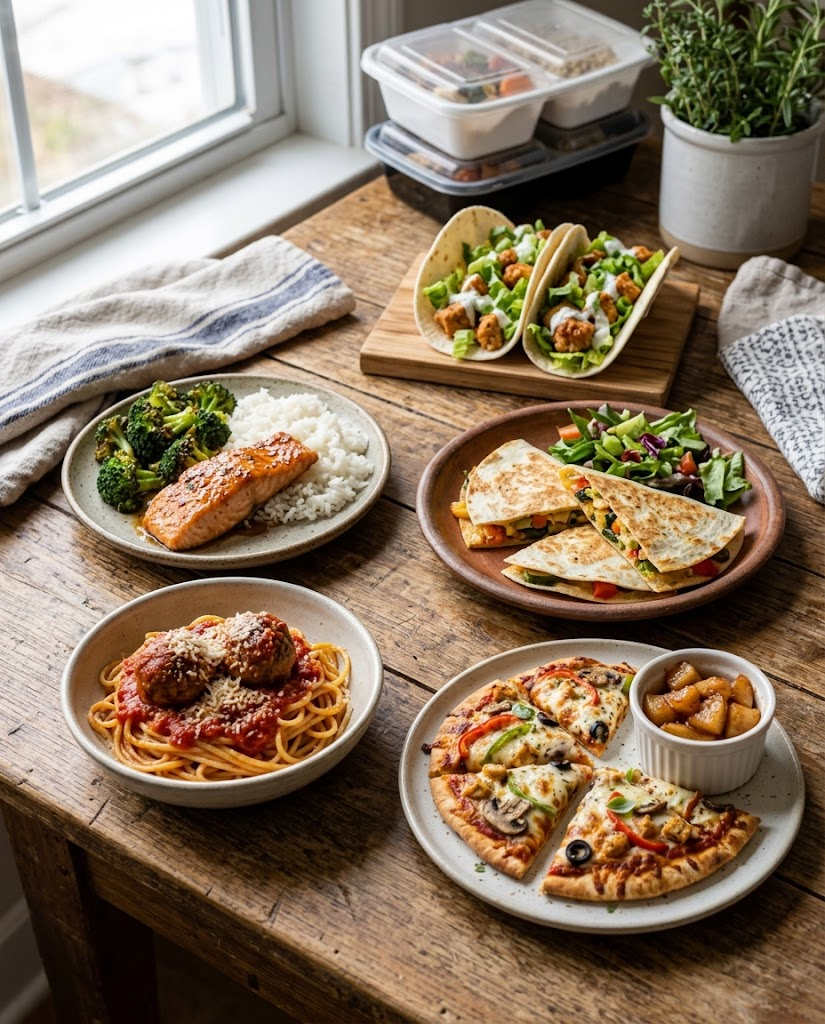
Monday: Honey soy salmon, broccoli, and microwave rice
Tuesday: Chicken bites in tortillas with lettuce and yogurt sauce
Wednesday: Vegetable quesadillas with salsa and a side salad
Thursday: Air fryer meatballs with pasta and tomato sauce
Friday: Personal pita pizzas followed by cinnamon apples
Several ingredients overlap throughout the week, including bell peppers, cheese, yogurt, chicken, and salad vegetables. This helps reduce food waste and keeps the shopping list manageable.
Prepare sauces, wash vegetables, and portion proteins in advance when possible. Even fifteen minutes of preparation can make weekday cooking feel more approachable.
How to Adapt Recipes to Your Air Fryer
Recipes should be treated as starting points rather than rigid commands.
A compact air fryer may cook food faster because ingredients sit closer to the heating element. A larger basket may need additional time, particularly when it contains more food.
When trying a recipe for the first time:
Use the recommended temperature
Check the food several minutes early
Turn or shake it halfway through
Measure the internal temperature when needed
Record any timing adjustment that worked for your appliance
After a few meals, you will begin to recognize how quickly your model cooks common ingredients.
Writing a small note such as “salmon works best at nine minutes” can save future guesswork. That is not glamorous culinary wisdom, but it is wonderfully useful on a Wednesday evening.
Common Air Fryer Mistakes
Overcrowding is one of the most frequent problems. Too much food blocks airflow and may produce uneven results.
Using too much oil can also make food greasy rather than crisp. Begin with a small amount and add more only when the recipe truly needs it.
Another common mistake is cooking every ingredient at the same temperature and for the same duration. Delicate fish, thick potatoes, chopped vegetables, and frozen snacks do not behave identically.
Avoid placing loose parchment paper or lightweight liners inside an empty air fryer. The circulating air may lift the material toward the heating element. Liners should be approved for air fryer use, held down by food, and used according to the appliance manufacturer’s directions.
Do not assume browned food is fully cooked. This is particularly important with thick poultry, burgers, meatballs, and frozen raw products.
Finally, avoid ignoring the basket after cooking. Grease and crumbs can accumulate, create odors, and contribute to smoke during future use.
How to Clean an Air Fryer Properly
Unplug the air fryer and allow it to cool before cleaning.
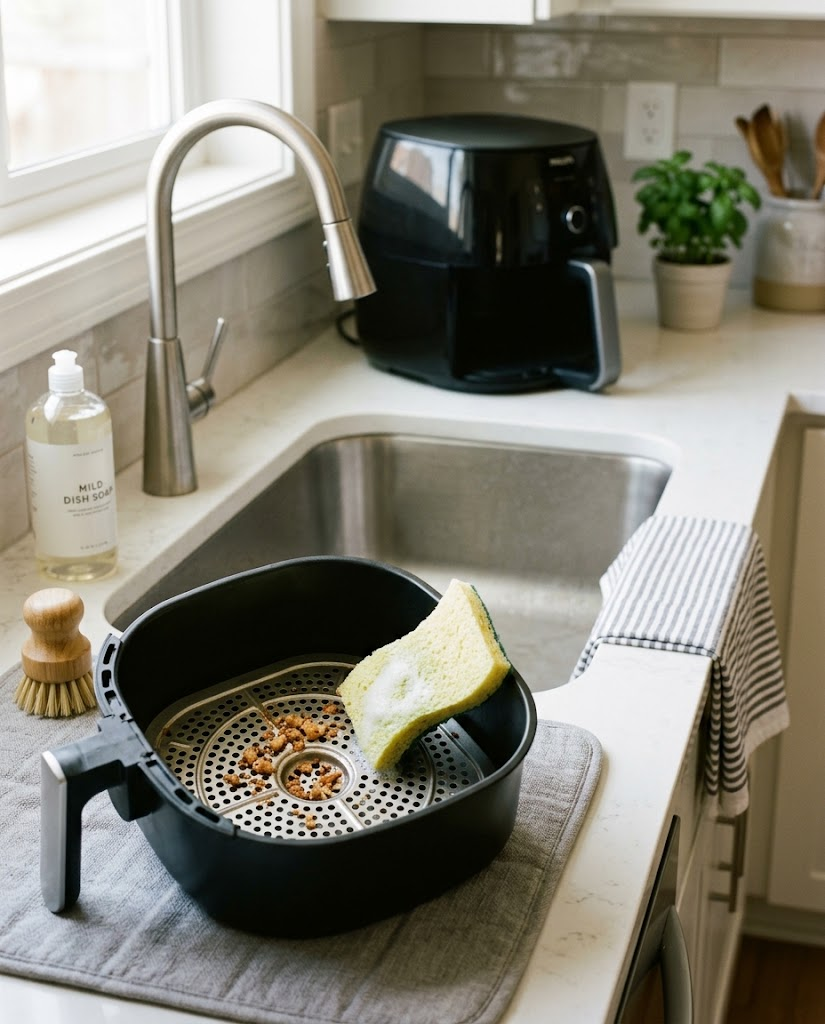
Remove the basket and crisping tray. Wash them with warm water, dish soap, and a soft sponge unless your appliance instructions recommend another method.
Avoid metal utensils, abrasive scrubbers, and harsh cleaners on nonstick surfaces. Scratches can damage the coating and make food more likely to stick.
Wipe the interior with a damp cloth. Check the area around the heating element periodically for splattered grease or food particles, following the manufacturer’s cleaning guidance.
The exterior and control panel can usually be wiped with a soft, slightly damp cloth. Never immerse the main appliance body in water.
Dry all removable parts before reassembling the unit.
Cleaning shortly after the air fryer cools is usually easier than waiting until residue has formed a tiny archaeological site.
Frequently Asked Questions About Air Fryer Cooking
Do I need to preheat the air fryer?
It depends on the model and recipe. Some air fryers preheat automatically, while others do not require it.
Preheating can improve browning for foods that cook quickly, such as fish, steaks, and breaded items. For longer-cooking vegetables and potatoes, the difference may be less noticeable.
Follow the appliance instructions and adjust based on your results.
Can I cook frozen food without thawing it?
Many frozen foods can be cooked directly from frozen, including fries, vegetables, breaded chicken products, and some fish fillets.
Check the package to confirm whether the product is raw or already cooked. Raw frozen poultry, meat, and seafood must reach the appropriate safe internal temperature.
Cooking may take longer than it would for thawed food.
Can I use aluminum foil?
Many air fryers allow limited use of foil, but manufacturer instructions vary.
Foil should never block all airflow or touch the heating element. It must be secured by food so it cannot move around the cooking chamber.
Acidic foods, such as tomatoes and citrus-based marinades, may react with aluminum. An approved air fryer-safe dish may be a better choice for those recipes.
Why is my food not crispy?
The basket may be overcrowded, the food may be too wet, or the temperature may be too low.
Pat the ingredients dry, use a light coating of oil, leave space around the pieces, and shake or turn the food during cooking.
Keep in mind that some foods naturally remain softer than others. An air fryer can brown zucchini, for example, but it cannot remove all of the vegetable’s moisture.
Can I reheat leftovers in an air fryer?
Yes. Air fryers are particularly good at reheating pizza, roasted vegetables, potatoes, breaded food, and other items that become soft in a microwave.
Begin at a moderate temperature, such as 325°F to 350°F or 163°C to 175°C. Check the food every few minutes to avoid drying it out.
Reheated leftovers should be steaming hot throughout. Foods containing meat, poultry, fish, eggs, or dairy require careful storage and reheating.
Cooking With More Confidence
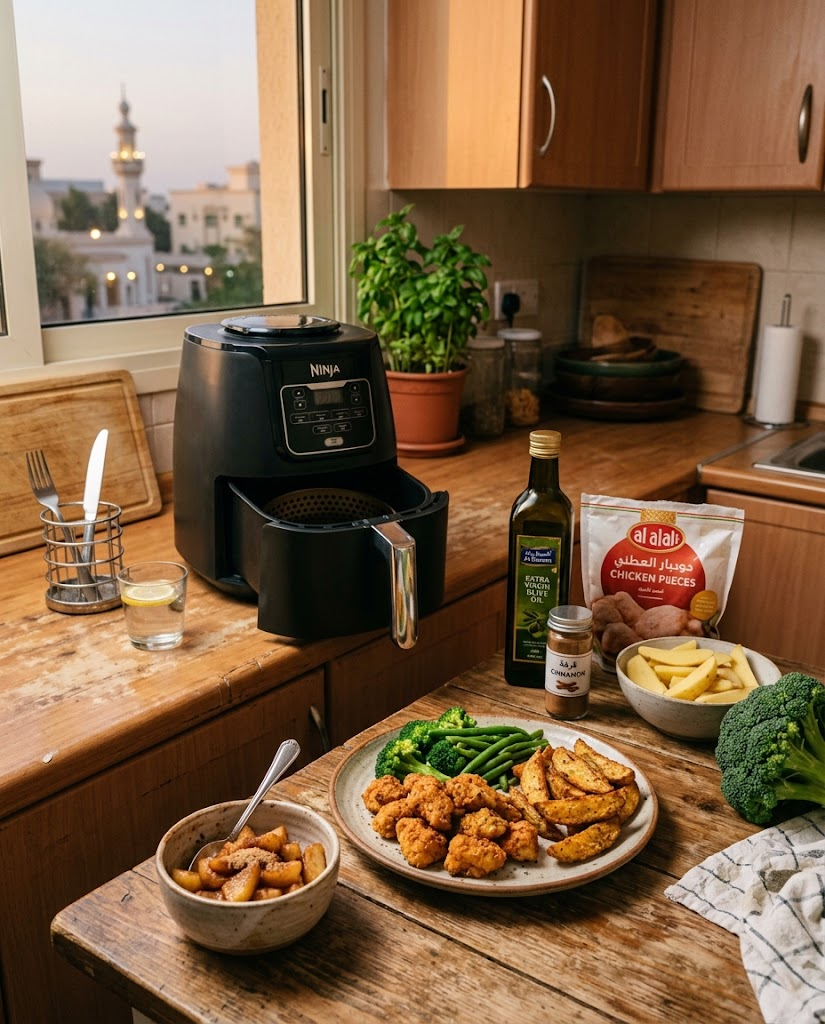
Learning to use an air fryer does not require advanced cooking skills. We simply need to begin with forgiving recipes, leave enough space in the basket, check food before it overcooks, and use a thermometer when safety depends on internal temperature.
Start with one or two recipes that appeal to you. Make the potatoes, try the chicken bites, or prepare a pita pizza after work. Once those feel familiar, adjust the flavors and ingredients based on what you already enjoy.
Good home cooking does not have to be complicated, expensive, or picture-perfect. Sometimes it is simply a hot meal made from ordinary ingredients before we become tempted to call crackers and cheese a complete dinner again.
With a little practice, your air fryer can become a dependable tool for quick breakfasts, easy lunches, simple weeknight meals, and satisfying snacks. More importantly, it can help cooking feel less like another obligation and more like something we can realistically manage, even during a busy week.