
Hayagriva: The Horse-Headed Avatar of Vishnu
Before diving in, please note: This post is for informational purposes only. If you’d like to know more about how we approach topics, feel free to check out our friendly Disclaimer Page.
Hey there, amazing readers! 🖐️ Just a quick note: yes, we know there are a lot of ads here. Trust us, we get it—it’s not the prettiest look, but they help us keep this blog alive and kicking. Those pesky little ads cover the costs of all the behind-the-scenes magic, from hosting and tech stuff to creating content we hope you’ll love.
We’re committed to delivering quality posts, and your support (even just sticking around despite the ads) means everything to us. So, bear with us, and thanks for helping us keep the good vibes rolling. Now, on to the fun stuff! 😉
TRANSLATE BUTTON AT THE END OF THE ARTICLE
Introduction to Hayagriva
Hayagriva is a fascinating deity in Hindu mythology, known as the horse-headed avatar of Lord Vishnu, one of the principal deities in Hinduism. This divine form of Lord Vishnu is depicted with the head of a horse and a human body. Hayagriva is revered as the supreme embodiment of intelligence, wisdom, and knowledge.
In this article, we will explore the mythological origins of Hayagriva, the symbolic meaning of his horse head, his physical appearance, his significance in Hinduism, his role in protecting dharma (righteousness), worship and devotion to Hayagriva, legends and stories surrounding him, his presence in different Hindu texts, and his influence in art and literature. Finally, we will discuss Hayagriva’s relevance in modern times.
Hayagriva’s Mythological Origins
According to Hindu mythology, Hayagriva’s origins can be traced back to the cosmic battle between the Devas (celestial beings) and Asuras (demons). During this battle, the Asura named Hayagriva stole the sacred Vedas, the ancient Hindu scriptures, and hid them deep underwater, plunging the world into darkness and ignorance. In response, Lord Vishnu took the form of Hayagriva to retrieve the Vedas and restore knowledge and enlightenment to humanity.
Symbolic Meaning of Hayagriva’s Horse Head
The horse head of Hayagriva carries deep symbolism in Hinduism. Horses have long been associated with power, swiftness, and intelligence. The horse head symbolizes the ability to control and direct one’s senses and overcome the challenges of the material world. It represents the supremacy of knowledge, wisdom, and intelligence over ignorance and delusion. The horse is also seen as a symbol of life energy, vitality, and fertility, further highlighting Hayagriva’s association with these qualities.
Hayagriva’s Physical Appearance
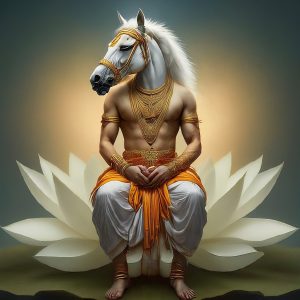
Hayagriva is usually depicted with a human body and a horse’s head, though there may be variations in artistic representations. He is often portrayed with a serene expression, adorned with divine ornaments and a crown. His skin is depicted as radiant and glowing, symbolizing his divine nature. Hayagriva is typically shown seated on a lotus flower, symbolizing purity and transcendence.
Hayagriva’s Significance in Hinduism
Hayagriva holds immense significance in Hinduism as the embodiment of intelligence, wisdom, and knowledge. He is considered the bestower of knowledge, particularly in the fields of arts, sciences, and spirituality. Devotees seek his blessings to enhance their intellect, memory, and learning abilities. Hayagriva is also revered as the preserver and protector of the Vedas, the sacred scriptures of Hinduism, ensuring the continuity of divine knowledge throughout the ages.
Hayagriva’s Role in Protecting Dharma
Dharma, the righteous path, is a fundamental concept in Hinduism. Hayagriva is believed to play a crucial role in upholding and protecting dharma. As the custodian of knowledge, he ensures that the divine laws and principles are preserved and disseminated to guide humanity towards righteousness. Hayagriva’s presence serves as a reminder that the pursuit of knowledge is essential for leading a righteous and fulfilling life.
Worship and Devotion to Hayagriva
Devotees of Hayagriva engage in worship and devotion to seek his blessings for knowledge, wisdom, and success in their endeavors. Various rituals and practices are performed to invoke Hayagriva’s divine presence and establish a deep connection with him. Mantras and prayers dedicated to Hayagriva are chanted, and offerings such as flowers, incense, and lamps are made at his temples. The annual festival of Hayagriva Jayanti is celebrated with great enthusiasm by his devotees.
Legends and Stories about Hayagriva
One popular legend surrounding Hayagriva narrates the story of how he restored the Vedas to humanity. After the Asura Hayagriva stole the Vedas and hid them underwater, Lord Vishnu assumed the form of Hayagriva and waged a fierce battle against the Asura. Eventually, Hayagriva emerged victorious, recovering the Vedas and restoring them to the Devas. This victory symbolizes the triumph of knowledge and enlightenment over ignorance and darkness.
Hayagriva in Different Hindu Texts
Hayagriva finds mention in various Hindu texts, including the Vedas, Puranas, and Agamas. The Vishnu Purana and the Bhagavata Purana provide detailed accounts of Hayagriva and his significance. These texts highlight his role as the bestower of knowledge and the protector of dharma. The Hayagriva Upanishad is specifically dedicated to him, emphasizing his importance in spiritual pursuits and the attainment of enlightenment.
Hayagriva’s Influence in Art and Literature
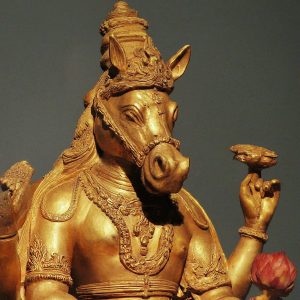
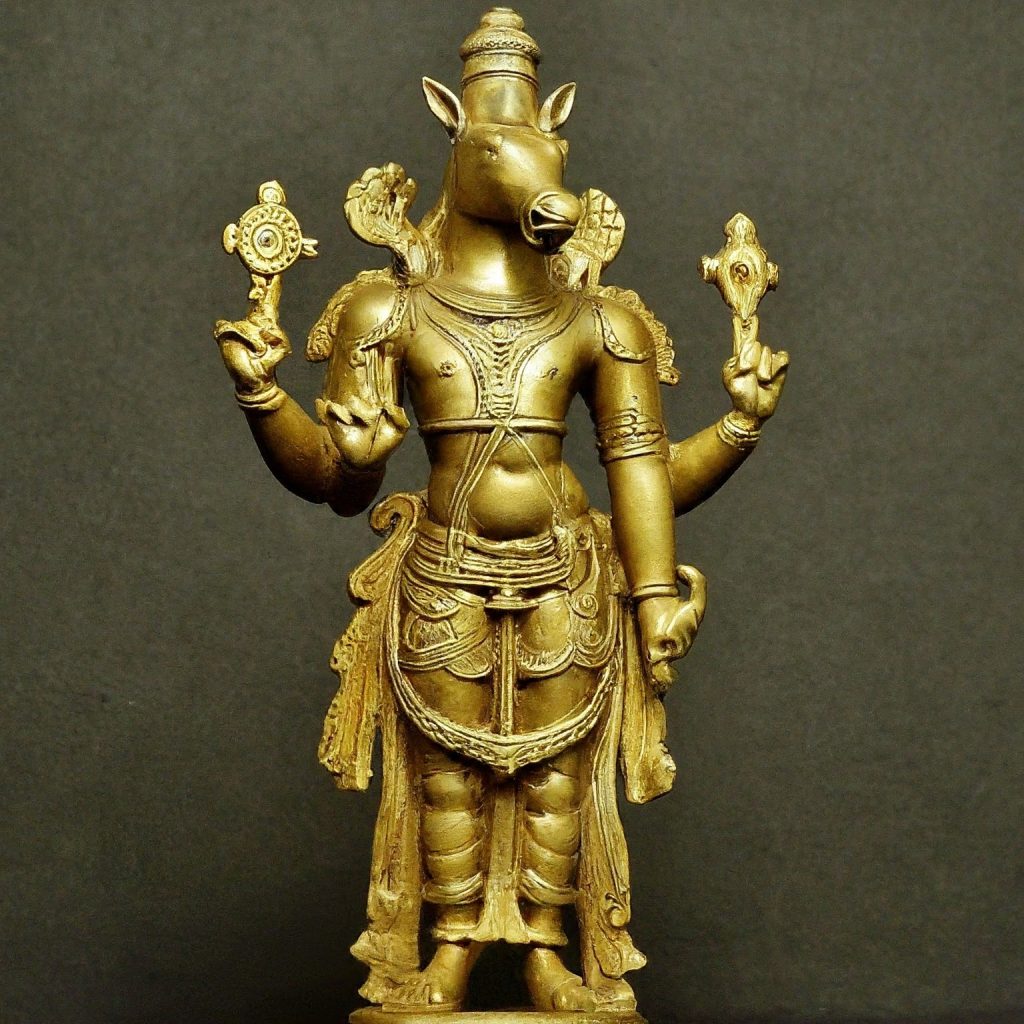
Hayagriva’s unique form has inspired countless artists and writers throughout history. Paintings, sculptures, and other art forms have depicted Hayagriva in various poses, capturing his divine essence. Literature, such as poetry and hymns, often invokes Hayagriva’s name to seek inspiration and guidance in the pursuit of knowledge. His influence can be seen in classical dance forms like Bharatanatyam and Odissi, where his stories are frequently portrayed.
Hayagriva’s Relevance in Modern Times
In the modern world, Hayagriva’s significance remains undiminished. With the constant pursuit of knowledge and wisdom, individuals can turn to Hayagriva for inspiration and guidance. His symbolism as the horse-headed deity encourages us to harness our intellectual abilities and overcome the challenges we encounter in our lives. Hayagriva serves as a beacon of light, reminding us of the importance of knowledge and righteousness in navigating the complexities of the modern world.
Conclusion
Hayagriva, the horse-headed avatar of Vishnu, stands as a powerful symbol of intelligence, wisdom, and knowledge in Hindu mythology. His origins, physical appearance, and significance hold deep meaning for devotees seeking enlightenment and guidance.
As the protector of dharma and the bestower of knowledge, Hayagriva continues to inspire and influence individuals in their pursuit of wisdom, both in ancient times and in the modern world.
By understanding and embracing the teachings and symbolism of Hayagriva, we can strive to lead lives filled with knowledge, righteousness, and spiritual growth.
