
Why Home Layout Affects Your Mood
Before diving in, please note: This post is for informational purposes only. If you’d like to know more about how we approach topics, feel free to check out our friendly Disclaimer Page.
Hey there, amazing readers! 🖐️ Just a quick note: yes, we know there are a lot of ads here. Trust us, we get it—it’s not the prettiest look, but they help us keep this blog alive and kicking. Those pesky little ads cover the costs of all the behind-the-scenes magic, from hosting and tech stuff to creating content we hope you’ll love.
We’re committed to delivering quality posts, and your support (even just sticking around despite the ads) means everything to us. So, bear with us, and thanks for helping us keep the good vibes rolling. Now, on to the fun stuff! 😉
TRANSLATE BUTTON AT THE END OF THE ARTICLE
Introduction
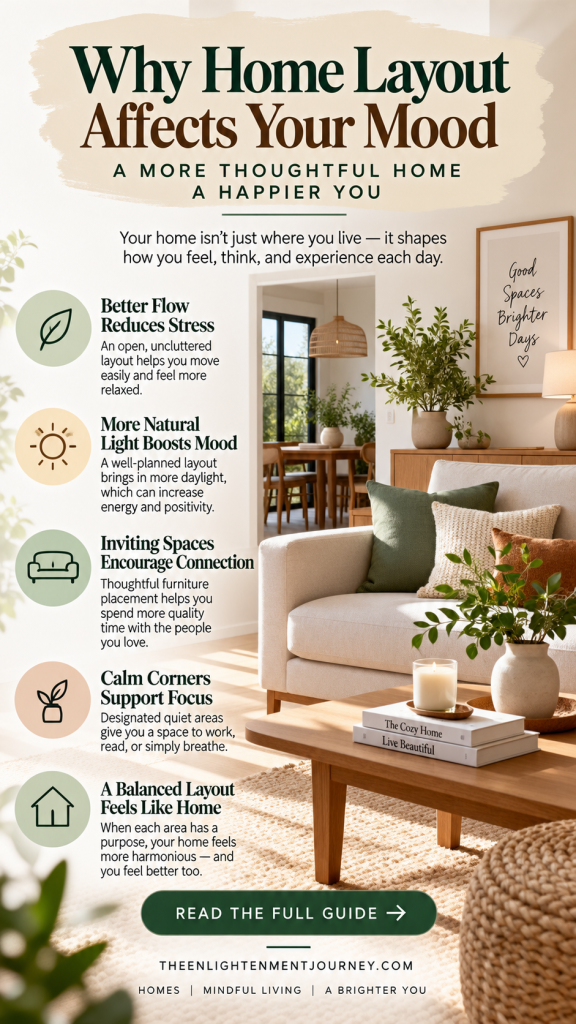
A home’s layout does more than define rooms and doorways. It shapes daily rhythms, attention, and overall mood. From the way light travels through a space to how easy it feels to move from one area to another, spatial design governs how relaxed, energized, or focused a person can be at home. This article explains why home layout matters for mood, how different layout choices influence psychological and emotional responses, and practical steps to optimize a living space for well-being. The aim is to provide clear, actionable guidance that supports both comfort and function.
The Link Between Space and Mood
Spatial design operates at the intersection of psychology and daily life. People respond to built environments through perception, behavior, and emotion. A well-considered layout influences mood through several channels:
Perceived control and safety: Spaces that are easy to navigate, with clear sightlines and predictable pathways, reduce anxiety and cognitive load.
Privacy and social interaction: The ability to retreat or gather with others supports emotional balance and social satisfaction.
Flow and energy: How rooms connect affects energy levels, with too many barriers or abrupt changes causing fatigue, while coherent transitions foster steadiness.
Personal meaning: Environments that reflect identity or preferences reinforce comfort and mood stability.
Understanding these connections helps in assessing a home’s current layout and identifying opportunities for improvement without sacrificing practicality.
Light, Color, and Perceived Space
Natural light strongly influences mood, circadian rhythms, and perceived room size. A layout that allows light to penetrate deeper into a plan can brighten mood and lessen fatigue. Key considerations include:
Window placement and path of daylight: Align furniture to avoid blocking light; consider how rooms adjacent to large windows benefit from reflective surfaces or lighter color tones.
Color psychology and depth: Light, warm neutrals can enlarge a space and create a calm ambiance, while accent colors can energize focal points when used thoughtfully.
Visual openness without overcrowding: A balance between open sightlines and defined boundaries preserves a sense of space and reduces visual noise.
Ceiling height and architectural features can also influence mood. Higher ceilings often evoke spaciousness and a sense of freedom, while lower ceilings may feel cozy when paired with warm lighting and soft textures.
Layout and Movement: How Floor Plans Shape Behavior
The way traffic moves through a home affects energy, focus, and comfort. Three core principles explain this link:
Clear circulation: Straight, unobstructed paths minimize interruptions and cognitive effort.
Clear transitions between zones help maintain momentum in daily routines.
Functional zoning: Distinct areas for work, rest, and social interaction support mood by reducing constant context switching.
Visual connectivity: A layout that allows glimpses of preferred spaces (for example, a living area visible from the kitchen) can maintain a sense of connection without sacrificing privacy.
Open plans offer sociability and brightness but can increase noise and reduce subtle privacy. Conversely, compartmentalized layouts provide quiet and focus but may feel isolating if not balanced with sightlines and light. The optimal approach depends on lifestyle, household size, and activity patterns.
Private vs Public Zones: Balancing for Well-Being
A mood-friendly home reserves space for both social engagement and solitary retreat. Design strategies include:
Flexible rooms: Even small adjustments, like movable screens or multi-use furniture, enable shifts between quiet and social modes without reconfiguring the entire layout.
Proximity to routines: Bedrooms and study areas benefit from being located away from high-traffic zones while maintaining convenient access to communal spaces.
Visual separation: Subtle changes in ceiling height, floor materials, or area rugs can delineate zones without isolating them.
A well-balanced plan reduces stress by providing opportunities to decompress during busy days and to connect during moments of social need.
Acoustics and Comfort: Sound in the Home
Sound quality strongly affects mood. Layout-related acoustics include:
Surface materials: Softer textiles, curtains, and rugs absorb sound and soften environments, supporting calmer states.
Room proportions: Small, boxy rooms tend to over-amplify sounds, while well-proportioned spaces with varied surfaces distribute noise more evenly.
Zoning and sound paths: Placing noisier activities (like home offices or play areas) away from bedrooms and quiet zones minimizes interruption and improves sleep quality.
Practical acoustic improvements can be achieved through furniture choices, window treatments, and strategic placement of soft furnishings.
Clutter, Organization, and Mental Clarity
A tidy, organized home reduces cognitive load and supports mood stability. Layout choices influence how easily items are stored, retrieved, and maintained:
Storage integration: Built-in storage that fits the room dimensions minimizes visual clutter and supports consistent organization.
Surface discipline: Fewer top surfaces in high-traffic rooms reduce opportunities for scattered objects, aiding focus and calm.
Accessibility and flow: Storage locations that align with daily routines (for example, coats near the entry, pantry near the kitchen) streamline tasks and lessen stress.
In practice, this means prioritizing accessible storage that accommodates daily needs without becoming a trap for stuff.
Personal Identity and Cultural Context
Homes reflect personal stories, routines, and cultural expectations. A layout that respects these elements tends to support better mood:
Personalization within structure: Intentional places for rituals, hobbies, and reminders of values can strengthen comfort and well-being.
Cultural norms and privacy: Layouts that honor privacy expectations and traditional family routines can reduce tension and support harmony.
Adaptability: A plan that accommodates changes in use, such as aging in place or evolving family dynamics, preserves mood stability over time.
Practical Design Guidelines to Improve Mood
Implementing mood-friendly layout changes does not require a total rebuild. The following guidelines offer practical steps:
Maximize daylight: If possible, reorient furniture to face windows, install mirrors to reflect light, or add translucent window coverings to diffuse brightness without glare.
Create distinct zones: Define a quiet area for reading or work and a social zone for gathering.
Use furniture arrangement, rugs, or screens to mark boundaries.
Optimize circulation: Ensure main walkways are clear and unimpeded; remove bottlenecks near doors or high-traffic areas.
Use color strategically: Select calm base tones for walls and introduce mood-boosting accents through art, textiles, or a single focal color.
Control acoustics: Layer soft materials in high-traffic spaces; add acoustic panels or heavy curtains where sound travels between rooms.
Curate surfaces and storage: Choose furniture with built-in storage and maintain a clean surface footprint to reduce visual clutter.
Integrate nature: Add plants and natural textures to soften spaces and provide visual interest without overpowering a room.
Adapt furniture scale: Ensure pieces are proportionate to room size; avoid oversized items that crowd spaces and restrict movement.
Plan for flexibility: Use modular furniture, movable screens, and multi-purpose zones to accommodate changing needs without major renovations.
Prioritize sleep spaces: Position bedrooms away from loud zones and provide sound-attenuating elements, soft lighting, and comfortable layouts.
Case Comparisons: Open Plan vs. Zoned Layout
Open plan advantages: Enhanced light, better social connection, flexible use of space.
Open plan challenges: Potential for noise, reduced sense of privacy, need for careful acoustic control.
Zoned layout advantages: Strong privacy, clear function, better sleep quality.
Zoned layout challenges: Can feel fragmented if transitions are awkward or lighting is inconsistent.
In practice, a hybrid approach often yields the most balanced mood outcomes: maintain a bright, open public area for social energy while preserving quiet, defined private zones for rest and concentration.
Common Mistakes to Avoid
Ignoring flow: A plan that looks good on paper but forces constant detours or backtracking creates fatigue.
Underestimating storage needs: Excess clutter arises when storage is insufficient or poorly located.
Overusing bold color in large areas: This can overwhelm the senses if not balanced with neutrals and lighting.
Failing to consider routines: Layout decisions should align with how a home is used daily; ad hoc changes without considering routines can backfire.
Disregarding accessibility: Designs that ignore movement limits or flexibility needs can create stress rather than comfort.
FAQ
How does natural light affect mood in a home?
Natural light supports wakefulness and mood regulation.Rooms with more daylight tend to feel more inviting and uplifting, while poor lighting can contribute to lethargy and low energy.
Position furniture to maximize daylight exposure and use light-colored walls to reflect de to brighten spaces.
What layout is best for reducing stress?
A layout that offers clear circulation, distinct zones for work and rest, and quiet areas away from high-traffic zones tends to lower stress.Balanced light, controlled acoustics, and accessible storage reinforce a calm environment.
How can I modify an existing home on a tight budget?
Prioritize decluttering and reorganization, improve lighting, add soft furnishings for acoustics, reposition existing furniture to create distinct zones, and incorporate affordable storage solutions.Simple changes like curtains, mirrors, and plants can make a meaningful difference.
Does color choice impact mood?
Yes.Neutral bases with carefully chosen accent colors can influence mood by affecting perceived warmth and vitality.
Use color to guide attention to important areas while avoiding visual overload.
How do I balance privacy and sociability in home layout?
Create a central social zone that remains visually connected to private spaces through sightlines or partial partitions.Use movable screens or furniture to adjust privacy as needed without sacrificing connection.
Conclusion
A home’s layout is a powerful driver of daily mood. By shaping daylight distribution, movement, privacy, and sensory experience, layout decisions influence energy, focus, and emotional balance. A thoughtful approach blends open, light-filled public spaces with well-defined private zones, guided by routines, cultural preferences, and personal needs. Implementing practical design changes—such as optimizing circulation, defining zones, enhancing acoustics, and reducing clutter—creates environments that support well-being. With deliberate adjustments, a home can become a reliable source of comfort, clarity, and mood stability.
