Ancestral Healing Practices Across Cultures
Before diving in, please note: This post is for informational purposes only. If you’d like to know more about how we approach topics, feel free to check out our friendly Disclaimer Page.
Hey there, amazing readers! 🖐️ Just a quick note: yes, we know there are a lot of ads here. Trust us, we get it—it’s not the prettiest look, but they help us keep this blog alive and kicking. Those pesky little ads cover the costs of all the behind-the-scenes magic, from hosting and tech stuff to creating content we hope you’ll love.
We’re committed to delivering quality posts, and your support (even just sticking around despite the ads) means everything to us. So, bear with us, and thanks for helping us keep the good vibes rolling. Now, on to the fun stuff! 😉
TRANSLATE BUTTON AT THE END OF THE ARTICLE
There is a quiet truth many of us begin to feel as we grow older: some of our deepest emotional patterns did not begin with us. Across cultures and continents, people have long believed that healing is not only personal—it is ancestral. Ancestral healing is the sacred practice of tending to the emotional, spiritual, and even physical imprints passed down through generations. It is about restoring harmony not just within ourselves, but within our entire lineage.
Long before modern psychology existed, communities around the world understood that the past lives on in the present. Today, ancestral healing is receiving renewed attention as people seek deeper forms of emotional clarity, spiritual grounding, and identity connection.
Key Points at the Beginning
Ancestral healing focuses on resolving inherited emotional, spiritual, and behavioral patterns.
Many cultures have practiced ancestral healing for centuries through ritual, prayer, and community healing.
These methods support emotional release, family relationship repair, and spiritual grounding.
Modern people can safely explore ancestral healing through meditation, journaling, and guided work.
The goal is balance, not blame—healing honors both past and present.
What Is Ancestral Healing?
Ancestral healing is the practice of addressing unresolved trauma, emotional wounds, or energetic patterns that were passed down through family lines. These patterns may show up as repeated life challenges, emotional struggles, relationship conflicts, financial difficulties, or deep-rooted fears that seem to have no clear personal cause.
The belief across many traditions is simple: when pain goes unhealed in one generation, it often seeks resolution in the next. Healing the present can gently release the past.
This work does not require you to relive ancestral trauma. It focuses on awareness, forgiveness, gratitude, intention, and restoration of balance.
Why Ancestral Healing Matters Today
In today’s fast-paced world, many people feel disconnected—from themselves, from family, and from cultural roots. Ancestral healing offers a powerful return to meaning.
It helps us:
make sense of repeating life patterns
restore emotional boundaries within families
strengthen identity and personal direction
release inherited fear and emotional burden
feel supported by a larger sense of belonging
It is not about blaming the past. It is about honoring it while stepping into freedom.
Ancestral Healing in Indigenous Traditions
Indigenous cultures across the Americas, Africa, Australia, and Asia have always honored ancestors as living spiritual presences rather than distant memories.
Key elements often include:
storytelling and oral history
ceremonial drumming and chanting
offerings to ancestors
community healing circles
guidance through dreams and visions
In these traditions, healing is never individual. It is communal and intergenerational.
African Ancestral Healing Traditions
Many African spiritual systems center strongly on ancestral connection. Ancestors are considered active spiritual guides who protect and advise the living.
Common practices include:
ancestor veneration through altars
libation rituals using water or herbs
drumming and trance healing
initiation ceremonies
spiritual consultation through traditional healers
Healing is seen as restoring harmony between the living, the ancestors, and the natural world.
Native American Ancestral Healing Practices
Native American traditions vary widely between tribes, yet most share deep ancestral reverence. Healing is inseparable from land, spirit, and family lineage.
Common ancestral healing tools include:
sweat lodge ceremonies
sacred pipe rituals
vision quests
medicine wheel teachings
healing songs and herbal medicine
Ancestors are honored through prayer, storytelling, and sacred gatherings.
East Asian Ancestral Reverence and Healing
In Chinese, Korean, and other East Asian cultures, honoring ancestors is central to family life and spiritual health.
Practices often include:
ancestral tablets in the home
grave tending and seasonal ceremonies
food offerings and incense
family lineage records
filial devotion rituals
Healing in these traditions focuses on maintaining balance between the living and deceased family members to ensure harmony and prosperity.
Celtic and European Ancestral Traditions
Pre-Christian European cultures also held deep ancestral practices. The Celts, Norse, and other ancient peoples honored ancestors as protectors and guides.
Traditional elements included:
seasonal festivals honoring the dead
sacred fire rituals
ancestral shrines
burial mound ceremonies
dream communication and divination
These practices emphasized continuity between worlds rather than separation.
Latin American and Andean Ancestral Practices
Indigenous Latin American traditions maintain a strong ancestral presence today, especially in Andean and Mayan cultures.
Common healing practices involve:
honoring ancestors through earth offerings
seasonal rituals tied to agricultural cycles
shamanic healing and soul retrieval
ceremonial prayers to family spirits
community remembrance gatherings
Ancestral healing here is deeply integrated with nature and collective life.
How Ancestral Healing Shows Up in Modern Life
Even without formal ritual, many people experience ancestral patterns in daily life:
repeated relationship struggles
financial insecurity mirroring family history
generational addiction cycles
inherited emotional suppression
fear of success or stability
Modern ancestral work helps make these patterns visible so they can be healed rather than repeated.
Modern Ways to Practice Ancestral Healing Safely
You do not need to belong to a specific culture to practice ancestral healing respectfully. The key is intention, humility, and emotional grounding.
Beginner-friendly methods include:
journaling about family patterns
writing letters to ancestors
guided ancestral meditation
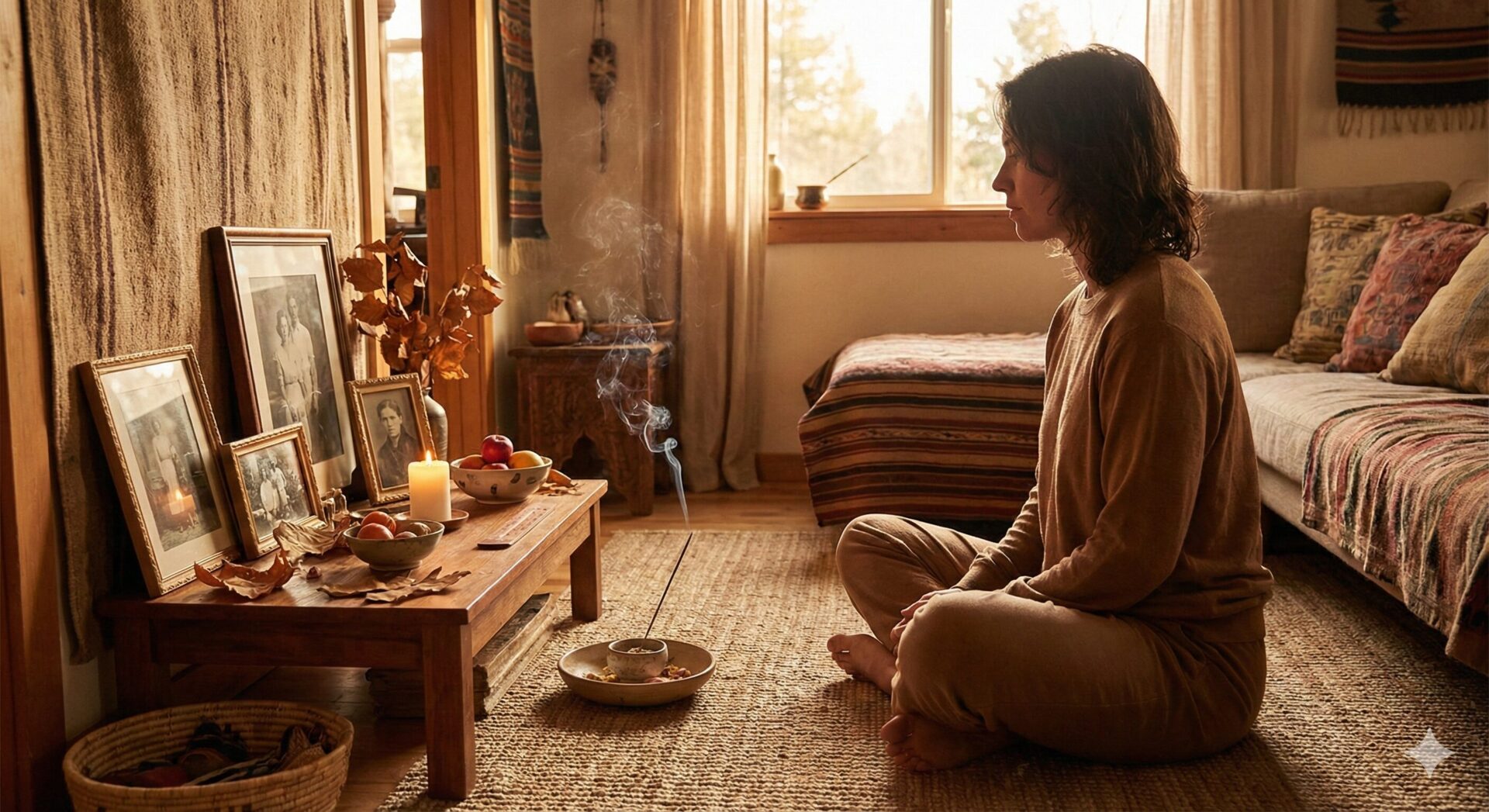
creating a small remembrance space
therapy that includes generational work
These practices work gently without overwhelming the nervous system.
The Emotional Effects of Ancestral Healing
Many people report:
emotional release without clear memory
grief for experiences they never personally lived
unexpected peace and relief
deeper compassion for family members
stronger emotional boundaries
This is normal. Healing often begins with awareness rather than control.
Spiritual vs Psychological Views on Ancestral Healing
From a spiritual perspective, ancestral healing involves soul-level connection across generations. From a psychological view, it aligns with intergenerational trauma, a well-documented concept in modern therapy.
Both perspectives agree on one truth: unresolved family trauma can influence behavior, emotional regulation, and stress patterns across generations.
You do not need to choose between spirituality and science—ancestral healing comfortably bridges both.
Table Summary: Ancestral Healing Across Cultures
| Culture | Core Practice | Primary Purpose |
|---|---|---|
| African | Libation and invocation | Harmony with ancestral spirits |
| Native American | Sweat lodges and vision work | Emotional and spiritual balance |
| East Asian | Ancestral altars and offerings | Family stability and prosperity |
| Celtic | Seasonal ceremonies | Continuity between worlds |
| Andean | Earth offerings and shamanic work | Ancestral and land harmony |
Signs You May Benefit from Ancestral Healing
You might feel drawn to this work if you notice:
repeating family struggles despite effort
unexplained fears or guilt
chronic emotional heaviness
deep curiosity about your lineage
feeling disconnected from cultural roots
These signs do not indicate something is “wrong.” They often signal readiness for deeper self-awareness.
Ethical Considerations and Cultural Respect
Ancestral practices are sacred in many cultures. Modern seekers should always:
avoid copying sacred rituals without proper context
approach with respect and humility
focus on personal lineage rather than appropriation
work with trained practitioners if exploring deeper rituals
honor the ancestors without romanticizing pain
Respect protects both the practitioner and the tradition.
How Ancestral Healing Strengthens Personal Growth
As ancestral patterns soften, many people experience:
improved relationships
clearer life direction
emotional stability
enhanced intuition
stronger personal boundaries
The work does not change who you are. It helps you become more fully yourself.
Ancestral Healing and the Future
As modern life becomes increasingly disconnected from roots and rituals, ancestral healing offers something beautifully grounding. It reminds us that healing is not just about self-improvement—it is about restoring the invisible threads that connect us across time.
When one person heals, many lives are quietly touched.
FAQ
What is ancestral healing?
Ancestral healing focuses on addressing and releasing emotional, spiritual, and behavioral patterns passed down through family generations.
Is ancestral healing religious?
Not necessarily. Many people practice it spiritually, while others approach it through psychological or therapeutic methods.
Can anyone practice ancestral healing?
Yes. Everyone has ancestors and inherited patterns, regardless of cultural background.
Does ancestral healing require rituals?
No. Simple practices like meditation, journaling, and therapy can support ancestral healing.
How long does ancestral healing take?
It is a gradual process. Some people feel shifts quickly, while others experience subtle changes over time.